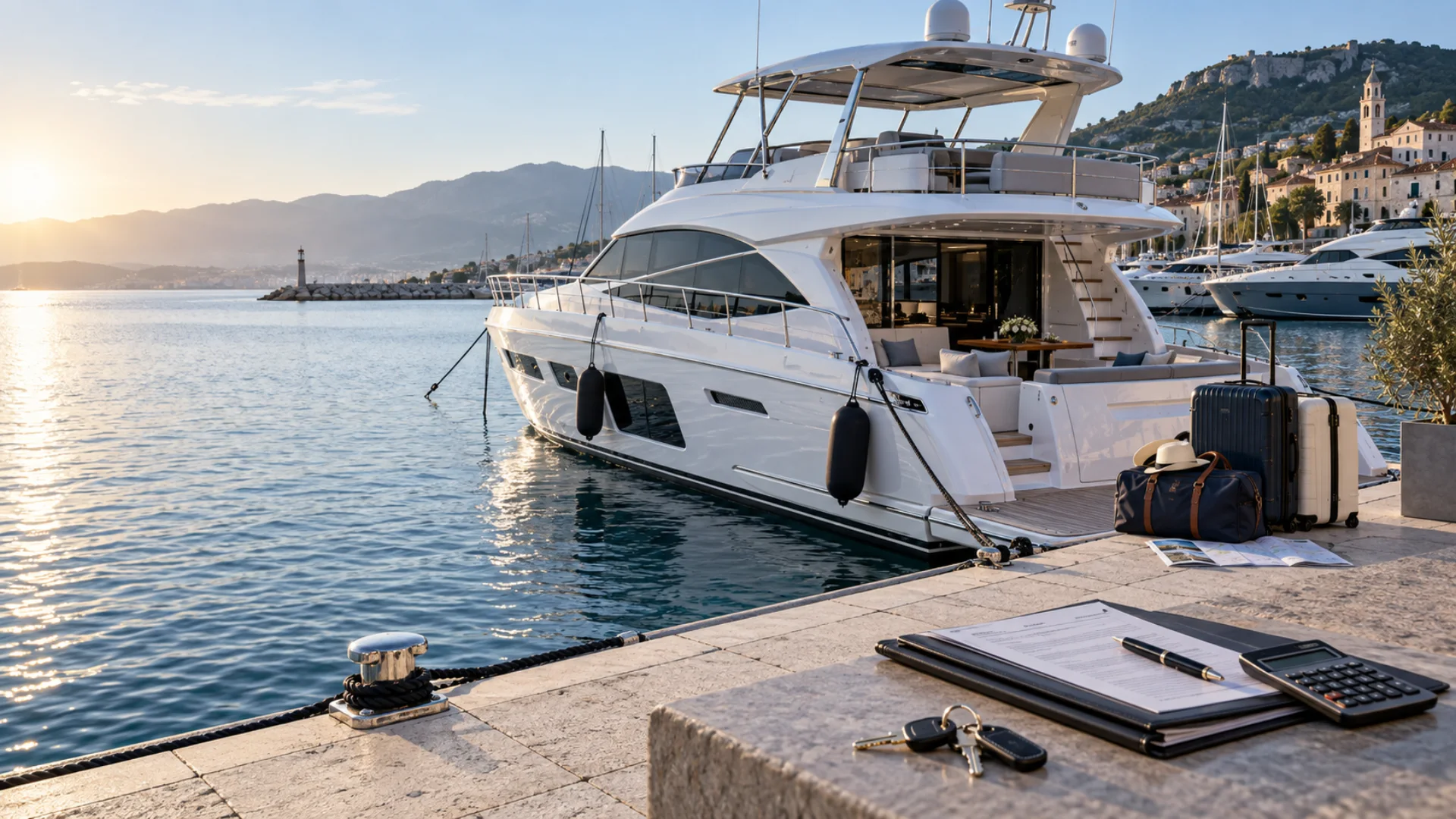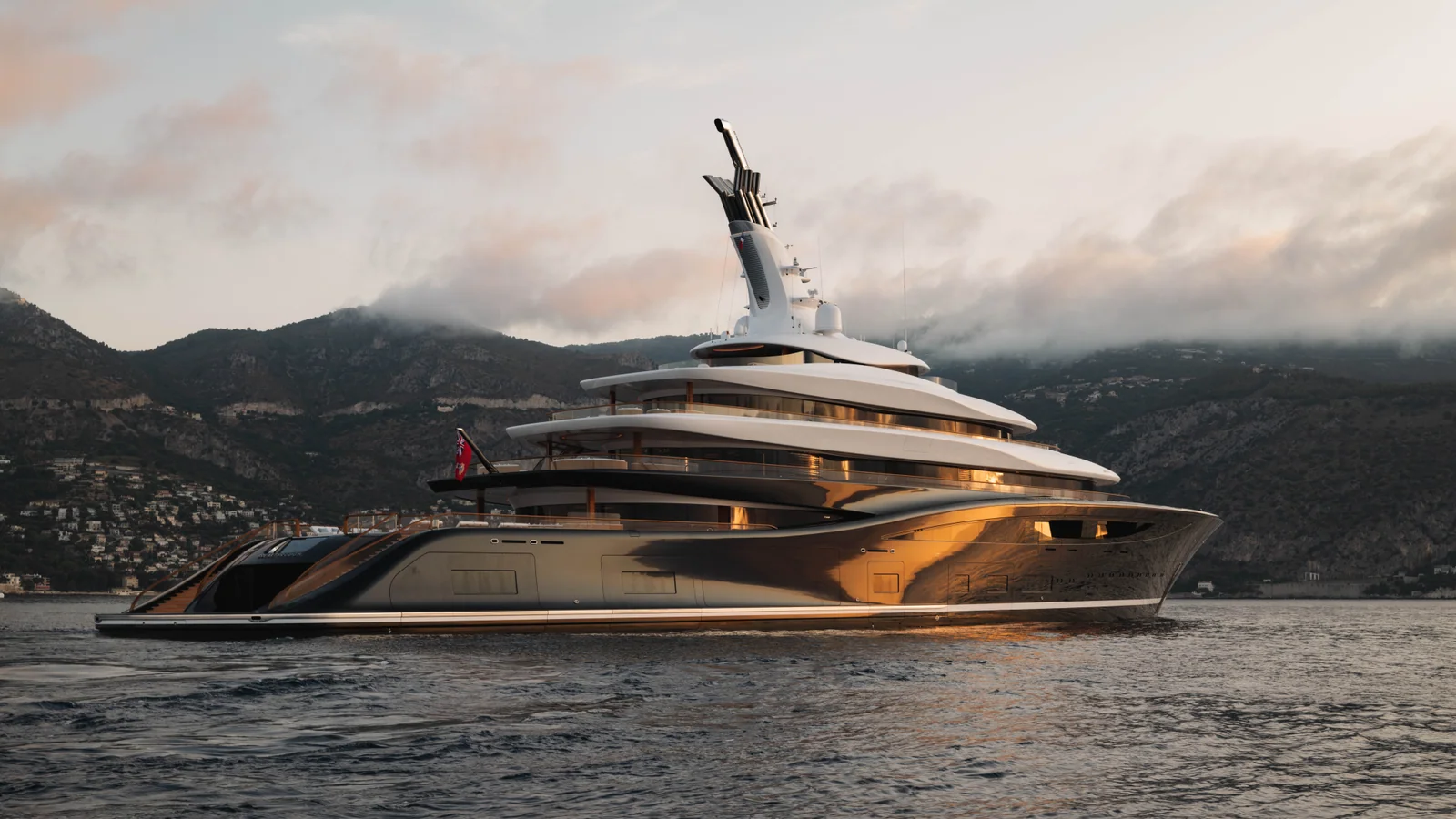
The owner of the yacht examined in my film spent more than €1.5 million on its refit. The yacht was subsequently listed at €3.4 million, the asking price fell to €2.6 million, and it still had not found a buyer. That does not mean the work was badly executed. It demonstrates something more important: the market does not return yacht-refit spending euro for euro.
A refit can be an excellent decision. A buyer can acquire a proven hull, renew its systems, rebuild the interior and create a yacht around a very specific cruising programme. The same buyer can also acquire an apparent bargain that turns into an open shipyard account after the first dismantling work. The difference does not begin with fabrics. It begins with the purchase price, survey and yard contract.
This is the calculation I would use before making an offer on an older yacht requiring substantial work.
Calculate the finished value before the purchase price
The usual mistake looks like this: a buyer sees a 27-metre yacht for €2 million, compares it with a new yacht costing €6 million or €7 million and concludes that there is an enormous margin available for rebuilding. That is the wrong comparison. The relevant benchmark is not a new yacht. It is a similar yacht of the same generation with a documented refit, ready to use.
My film examines a publicly offered 2011 Sunseeker 88. Its owner reported more than €1.5 million of spending since 2016, including additional gyroscopic stabilisers, electronics, larger generators, a rebuilt flybridge with a Jacuzzi and a renewed interior. The asking price fell from €3.4 million to €2.6 million. This remains an asking price, not a confirmed transaction price, but it gives us a market ceiling against which to test another project.
The calculation is simple:
comparable finished-yacht value – works budget – contingency – transaction costs = maximum purchase price.
If the completed yacht is offered at €2.6 million, a realistic works budget is €1.1 million and the contingency is €250,000, I should pay no more than about €1.25 million for the yacht requiring work. That is before auction premium, transport, taxes, finance and the owner’s time.
Paying €2 million does not automatically make the project wrong. The difference must simply be described honestly. It is not an investment return. It is the premium paid for a personal specification, control over the work and the satisfaction of creating the yacht.
A survey is not there to confirm the decision
The pre-purchase survey should uncover reasons to reduce the price, change the scope or walk away. It should not become a formality performed after the buyer has made an emotional decision.
On a 15-year-old yacht of this size, I would separately examine:
- hull, bottom and decks, including moisture readings and remaining teak thickness;
- service history of engines, gearboxes, shafts and generators;
- oil analysis and the real running hours of auxiliary machinery;
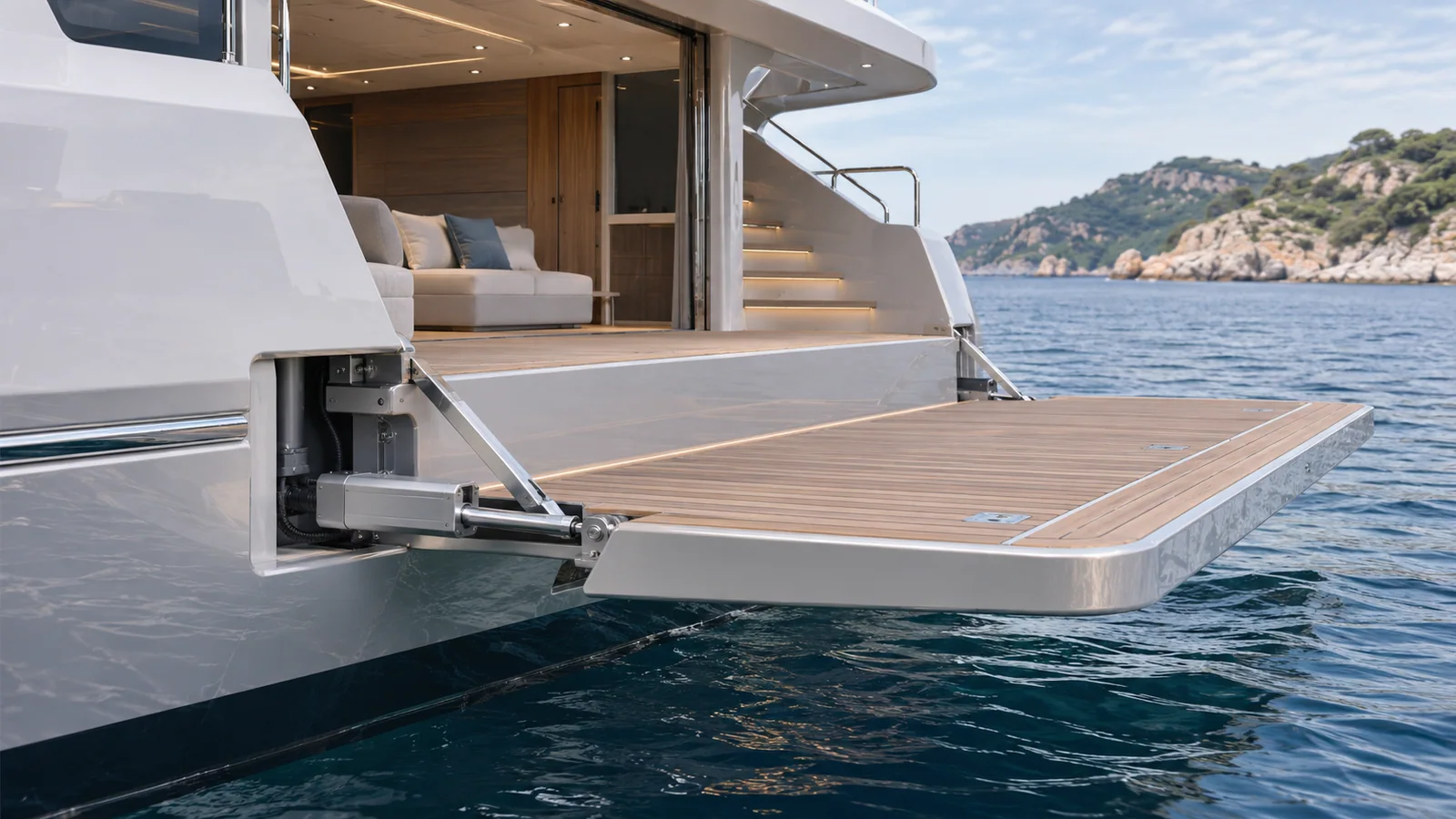
- stabilisers under load, plus platform and passerelle hydraulics;
- air conditioning, watermaker, batteries, sanitary and electrical systems;
- CE, flag, tax, class and maintenance documentation.
Every item should sit in one of three columns: completed and documented; operating but requiring future service; or scheduled for repair. Only then do we know whether we are buying an attractive hull or a collection of deferred invoices.
Low engine hours alone do not close the machinery discussion. Many maintenance operations also have a calendar limit. A yacht that has spent years alongside may present better than a heavily used one, but seals, hoses, batteries and cooling systems continued to age. This is why a documented maintenance record is more valuable than an assurance that the owner “spared no expense”.
The first estimate is the beginning, not the answer
Owners usually know the quoted price of paint, teak and upholstery. The larger risk sits behind the joinery. A leaking tank may only appear when furniture is removed. Corrosion at one terminal may indicate trouble across several circuits. A shaft or propeller reveals its true condition only after workshop measurement.
The estimate should therefore separate four elements:
- fixed-scope work at an agreed price;
- items charged by labour hours or material consumption;
- variations requiring written approval;
- the owner’s contingency, which is not a budget for new ideas.
In the case study, a substantial but still controlled refit was estimated at €600,000 to €1.6 million. I used €1.1 million for the working calculation, with a separate €250,000 contingency. A deep rebuild involving new wiring, joinery, electronics and additional machinery can move into a €1.7–€2.3 million range. These are not shipyard offers or a universal price list. They illustrate the scale that must be replaced by project-specific quotations after inspecting the actual yacht.
The contract should require a simple variation procedure: photograph of the defect, explanation of the cause, repair scope, schedule effect, price and written approval by the owner or project manager. Without it, dozens of small decisions agreed over the telephone can consume the entire contingency.
ICOMIA has developed a standard refit contract covering payment, insurance, liability, subcontractors, warranty and redelivery. A template will not solve the project, but it helps owners compare yards on a similar contractual basis. For a substantial refit, the document should be reviewed by a maritime lawyer and the yacht’s insurer.
What the market rewards — and what it will not return
Not all expenditure carries the same resale value.
Documented service on engines, generators, stabilisers, shafts and safety systems is the easiest spending to defend. A buyer is not paying for the invoice itself. The buyer is paying for lower risk and for avoiding an immediate loss of the coming season.
Fresh paint, sound teak and current electronics improve presentation and remove visible near-term costs. They still do not transfer into the price on a one-for-one basis.
Personal interiors and taste-led modifications are the hardest expenditure to recover. A saloon rebuilt for €300,000 may be perfect for the present owner and another refit for the next. A flybridge Jacuzzi can improve the listing photographs without adding its full structural, installation and opportunity cost to the yacht’s value.
Use value and residual value are different calculations. The problem begins when an owner enters private satisfaction into a spreadsheet as an investment the market is expected to return.
Customs can change the result, but it is not automatic
For a non-EU yacht being repaired in an EU yard, the possibility of using inward processing should be examined. The European Commission explains that non-EU goods may be placed under this procedure for processing or repair without import duty and import taxes becoming due, provided customs authorisation is obtained and the procedure is correctly discharged.
This can materially alter a refit budget, but it does not mean an automatic “VAT-free refit” for every yacht. Customs status, owner, flag, scope, location, authorisation holder, invoice structure and the yacht’s destination after the work all matter.
The practical rule is simple: a customs agent should confirm the structure in writing before dismantling starts and before the first invoices are issued. On a million-euro project, the tax difference can exceed the difference between two yards’ quotations, but only when the procedure genuinely applies.
When a personal refit makes sense
I see four situations in which the project can be defended.
First, the owner intends to keep the yacht for eight or ten years. Resale is then a distant problem, while the owner spends a long period using a yacht configured around a specific programme.
Second, the entry price is genuinely low after the survey confirms the yacht’s condition. Not low relative to a new model, but low relative to completed yachts of the same generation and segment.
Third, the yacht will operate commercially and the refit may improve rates and bookings. That argument requires a business plan covering commissions, crew, berth, maintenance and weeks without charter. It cannot rest on gross weekly rates.
Fourth, the owner simply wants this project and knowingly accepts that part of the expenditure will never be recovered. There is nothing wrong with that. The cost must be acknowledged before purchase, not after the first season.
If none of these conditions fits, it is usually more rational to buy a yacht somebody else has already refitted or to choose a younger yacht. The used market contains many projects where one owner paid for the work, the listing waited and the price eventually fell. Our analysis of used-yacht market dynamics provides the wider context.
Before purchase, W Yachts can help structure comparable listings, the survey scope and the full project budget. Final numbers must still come from the surveyor, authorised service providers, the selected yard, customs agent and lawyer, not from a generic calculator.
My rule is short: I do not buy a yacht for refit until I have calculated it as if the worst reasonable version of the estimate were going to happen. If the project still works, the discussion can continue. If it works only under a perfect scenario, it is not a bargain. It is a bet financed by the next owner.