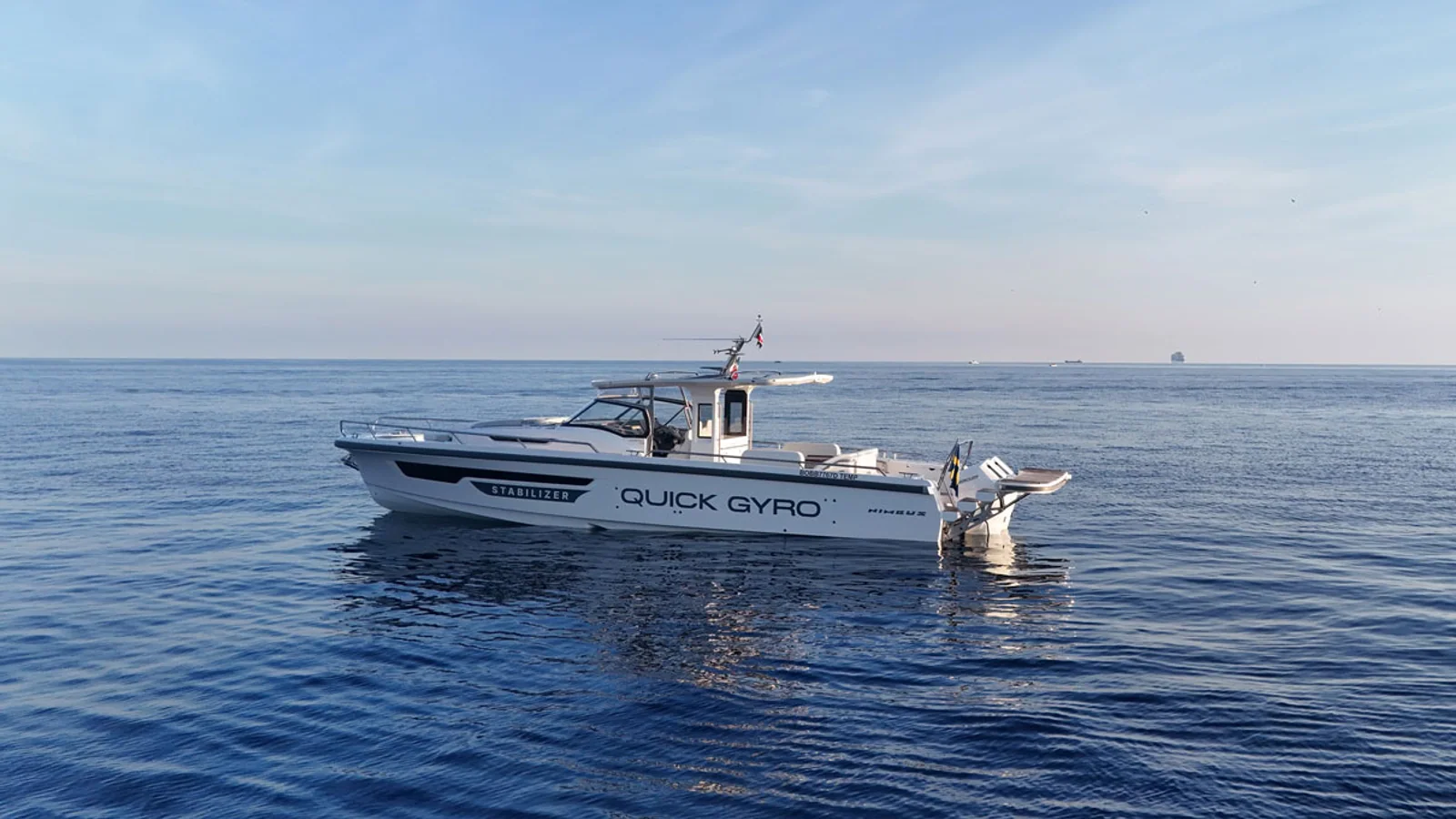
On paper, the manoeuvre looks almost too simple: a yacht sails 12 nautical miles off the Italian coast, discharges its private Temporary Admission, returns with a signed charter agreement and begins commercial operation. In practice, the words “leaves” and “returns” conceal a chain of conditions, records and legal layers that can determine whether the charter is a compliant operation or a very expensive mistake.
On 15 May 2026, Italy’s Agenzia delle Dogane e dei Monopoli published Circular 11/2026. It addresses questions that have occupied owners, captains, shipyards and advisers for years. Its importance does not lie in creating a new exemption. It lies in describing how a yacht registered outside the European Union may move from private use under Temporary Admission to a paid charter operation.
That is good news for the market. It is not an amnesty, an automatic VAT reset or a universal loophole for every yacht flying a non-EU flag.
What Italy actually clarified
A privately used yacht registered outside the EU can be placed under Temporary Admission by the act of crossing the frontier of the Union customs territory. At sea, the Italian administration generally treats the limit of territorial waters — 12 nautical miles from the baseline — as that frontier. A privately used seagoing yacht may remain under Temporary Admission for up to 18 months.
The Circular then answers the practical question: what happens when a yacht entered Italy privately but its owner later secures a client and signs a paid charter contract?
ADM’s answer is clear. The private Temporary Admission must first be properly discharged by taking the yacht outside EU territorial waters. The vessel may then re-enter Italy for commercial activity with a charter contract and the documents required for commercial Temporary Admission.
This is not a change of status written into the logbook while the yacht remains in a marina. It is a transition between two distinct customs uses, separated by an actual exit from the Union customs territory.
Twelve miles is not a reset button
The 12-mile boundary is the most newsworthy part of the guidance. It also invites a dangerously incomplete summary: sail out briefly, turn around and the yacht is cleared to charter.
The Italian administration states that private Temporary Admission is discharged when the yacht leaves EU territorial waters. The holder of the procedure must nevertheless prove when the yacht entered and left. Evidence can include AIS records, a document from a third-country port, proof of bunkering abroad or the yacht’s logbook. In a serious operation, these should form a coherent evidence package rather than a single convenient screenshot.
AIS should be active and correctly configured. Its route should correspond with the deck and engine logs. Before departure, the captain should know which documents will be presented on re-entry and which competent customs office is handling the operation.
The 12-mile limit is therefore a geographical condition. The legality of the full charter depends on a much longer list.
How the private-to-commercial transition should work
The Circular describes the following sequence:
- The yacht is in Italy under private Temporary Admission and continues to meet the conditions of that procedure.
- A paid charter contract is concluded before the private admission period expires.
- The yacht leaves EU territorial waters, discharging private Temporary Admission, and retains evidence of the exit.
- On re-entry, Annex 71-01 and the commercial contract are presented to the competent customs office.
- The commercial activity is recorded in the yacht’s logbook or another customs record agreed with the authorities.
- At the end of the commercial operation, the yacht leaves EU territorial waters again and preserves evidence of that departure.
Every step requires preparation. The charter agreement must be genuine and consistent with the vessel’s documentation. Flag compliance, commercial certification, insurance, crew qualifications, employment arrangements and local port requirements must all be checked independently of customs law.
The commercial clock is not the private 18-month clock
This is one of the Circular’s most important distinctions. A privately used seagoing yacht may remain under Temporary Admission for up to 18 months. Commercially used means of transport are governed differently: EU law links the deadline to the time required to carry out the relevant transport operation.
The Italian guidance translates that into operational terms. A commercial yacht may remain for the period and itinerary covered by the contract. It does not gain a fresh 18-month entitlement after the charter ends. Dates, route and the genuine nature of the voyage matter.
This is where many appealing online explanations break down. Crossing the 12-mile line does not create an anonymous new 18-month commercial window.
Four legal layers that must remain separate
Owners often make the same mistake: one authorisation or one certificate is treated as approval for the entire operation. A compliant charter rests on at least four separate layers.
Customs comes first. This covers Temporary Admission, the registration and use conditions, discharge of the private procedure and commercial re-entry.
VAT is separate. For short-term hire, the place of taxation generally follows the place where the yacht is actually put at the customer’s disposal. Under the EU VAT Directive, hire of a vessel for no more than 90 days is short-term. Correct customs treatment does not by itself settle VAT registration, invoicing or the taxable amount.
Flag and commercial status form the third layer. The yacht must be authorised for commercial operation by its flag administration. A private yacht cannot necessarily become a commercial yacht through a single email to the registry.
Safety, crew and insurance form the fourth. A private policy may not cover paid carriage of guests. Certificates, passenger limits, equipment, crew contracts and the master’s obligations must match the activity actually performed.
If one layer fails, the other three do not cure the operation.
Who can use the procedure
EU Temporary Admission rules look at the yacht’s registration or ownership, where the relevant persons are established and who actually uses the vessel. Exceptions exist, but they cannot be replaced with the slogan “offshore company and non-EU flag”.
ADM’s commercial example concerns a non-EU registered yacht whose users, crew and tourists are established in a third country. In that case the yacht may remain for the contract period and itinerary. This is an important qualification frequently omitted from short summaries of the guidance.
For an EU-resident owner, nationality or residence alone does not answer every question, but a Cayman company is not a universal solution either. Ownership, operator, authorised user, master, charterer, guests and actual use must be examined together. Any exception relied upon must match the real operation rather than merely the heading of a contract.
Useful clarification for yachts in refit
The Circular also addresses yachts delivered to Italian yards. In a typical structure the owner holds the private Temporary Admission while the shipyard becomes the holder of inward processing during the refit.
ADM says that where the holders and purposes of the two procedures differ, the period during which the yard holds the yacht under inward processing is not counted against the owner’s 18-month private Temporary Admission period. Only the periods during which the yacht is actually under the owner’s procedure count.
That conclusion is more favourable than some secondary reports suggest. It does not remove the need to open, secure and discharge the yard’s procedure correctly. Ordinary maintenance may be carried out under Temporary Admission when it does not alter the yacht’s structure, performance or value. A substantial refit needs separate analysis.
What this means for an owner
If you intend to combine private use and charter in the same Italian season, do not begin by asking how many times you must cross the 12-mile line. Begin with one map of the entire operation.
Before taking the first deposit, you should have:
- a verified ownership, registration and actual-use structure;
- a written operational plan agreed with an Italian customs agent or adviser and the competent ADM office;
- confirmed commercial flag status, certificates and insurance;
- a charter agreement consistent with the route and the actual place where the yacht is put at the client’s disposal;
- a VAT registration and invoicing analysis;
- Annex 71-01 and the complete re-entry file;
- a procedure for preserving AIS, deck-log, engine-log and supporting evidence;
- a plan for discharging the commercial operation before the yacht receives its next private guests.
In this kind of transaction, a broker’s job should not end with finding the client. The captain, manager, customs agent, tax adviser, insurer and flag administration need to work from the same plan. At W Yachts, we treat the intended use and charter structure as part of the purchase decision, not paperwork to be left until the week before the first trip.
Owners preparing for the Mediterranean season may also find our practical Cannes Yachting Festival guide useful. The same principle applies on the dock and in customs planning: the valuable work is done before the yacht and client arrive.
The conclusion: clearer does not mean simple
Circular 11/2026 matters because it replaces part of the industry’s informal interpretation with a defined procedure. It gives qualifying non-EU yachts a workable route from private use to charter and confirms how departure beyond territorial waters can discharge private Temporary Admission when properly evidenced.
It does not provide tax immunity or commercial permission for every private yacht. It does not turn an offshore company into a magic key, nor does it replace flag, VAT, insurance or crew requirements.
Its real benefit is not a new loophole. It is predictability. In superyacht charter, predictability has a specific value: the operation can be planned before the contract is signed instead of being explained to the authorities after the charter has already begun.
This article is for general information only and does not constitute legal or tax advice. Every operation should be reviewed for the particular yacht, flag, ownership structure, users, itinerary and charter agreement.