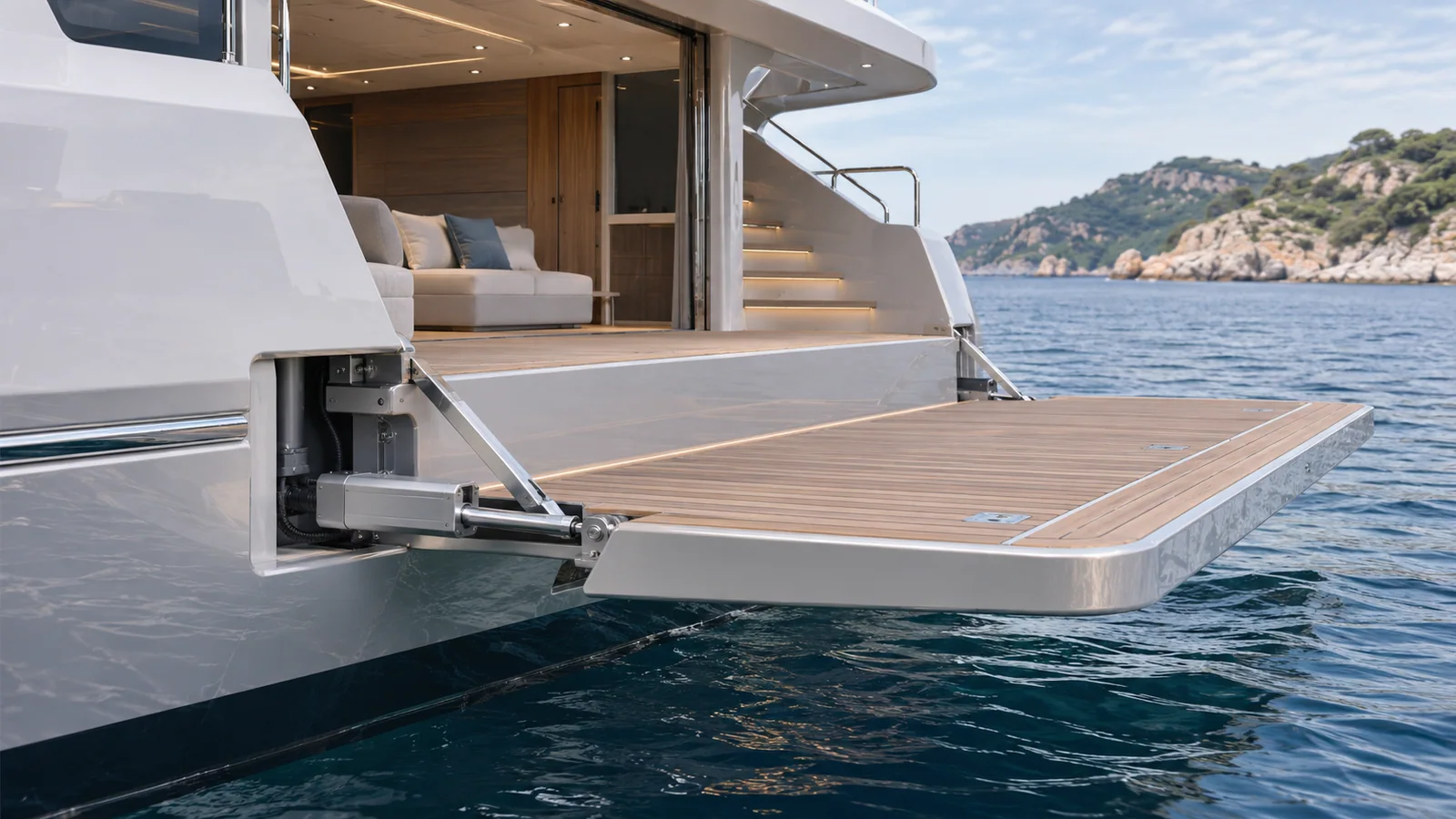
At IBEX, the most useful new detail is not always a hull. Sometimes it is the material that decides whether a cockpit table still looks good after several seasons or needs sanding, coating or replacement. Teak Isle Manufacturing has announced an expanded range of PolyTech applications, positioning the material as a way to bring a wood-like look back into modern boat design while keeping the durability and low maintenance associated with HDPE.
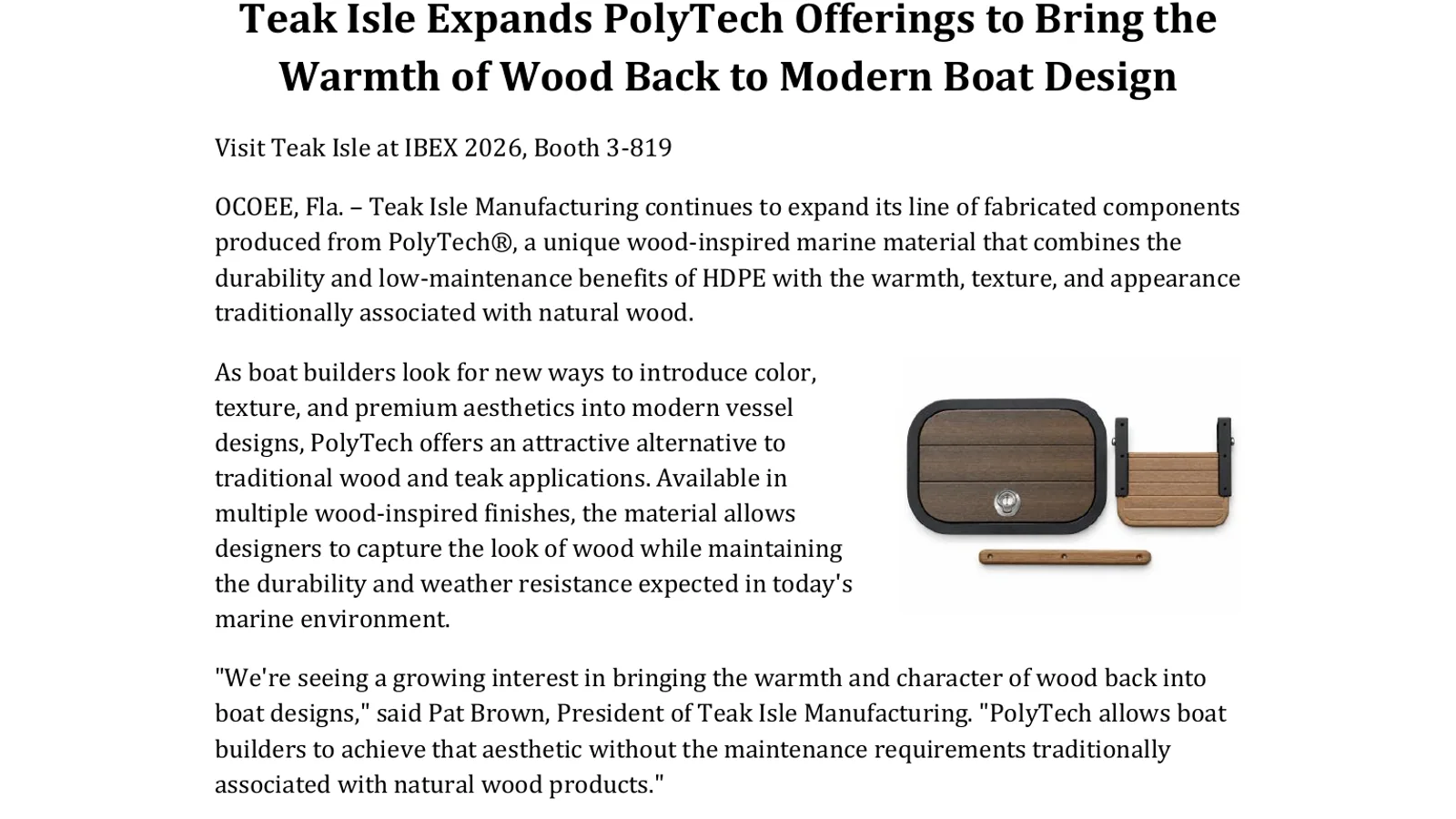
The company describes PolyTech applications including entry steps, floor storage lids, tables, accent pieces and custom fabricated components. In its 9 October release, Teak Isle says many parts originally designed for marine-grade HDPE can be adapted to PolyTech without redesigning the product from scratch.
Wood As An Appearance, Not A Maintenance Burden
For a motor-yacht owner, that is a relevant direction because the market has long sat between the warmth of teak and the upkeep it demands. Natural wood can add character that plain white plastic cannot, but it requires care, ages unevenly and can be expensive to repair in poorly chosen areas. PolyTech is trying to occupy the middle ground: colour and texture inspired by wood without the full maintenance burden of the natural material.
That does not make every synthetic substitute automatically better. A buyer should check UV resistance, heat underfoot, fixing method, CNC edge finish and whether a damaged part can be replaced locally. On a premium yacht, a detail can look excellent on a boat-show stand; the real test comes after a season of sun, salt water and sunscreen.
What To Ask The Yard
If a new model or refit uses wood-look materials, ask for the material name, technical sheet, cleaning instructions and a list of components made from the same range. It is also worth checking whether replacement parts will be available and whether the colour can be matched several years later.
This is a practical topic in any yacht refit economics conversation. For a W Yachts client, the conclusion is straightforward: a wood-look finish can be useful, but only when the yard can explain how it will age and how it will be repaired after normal use.