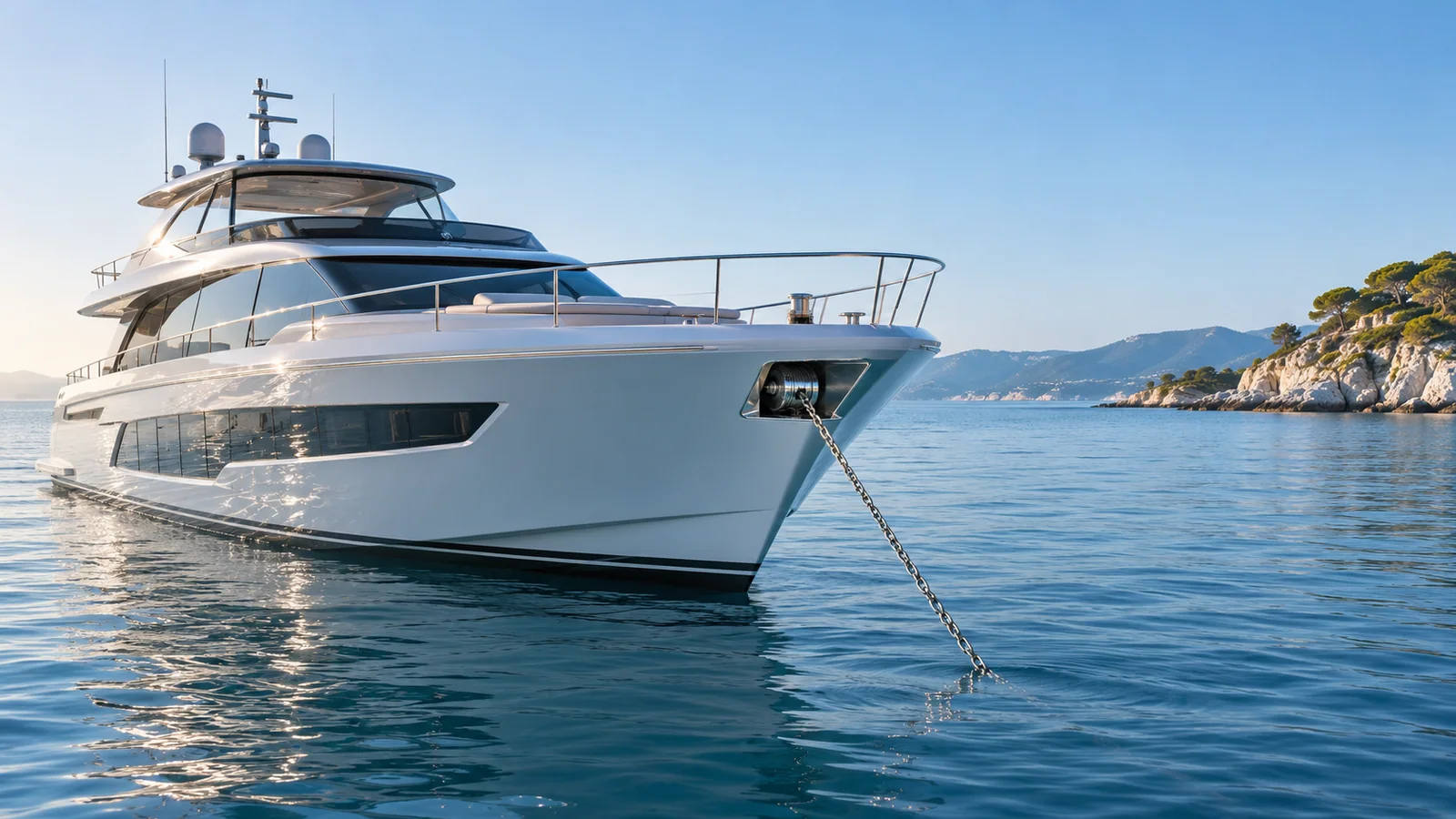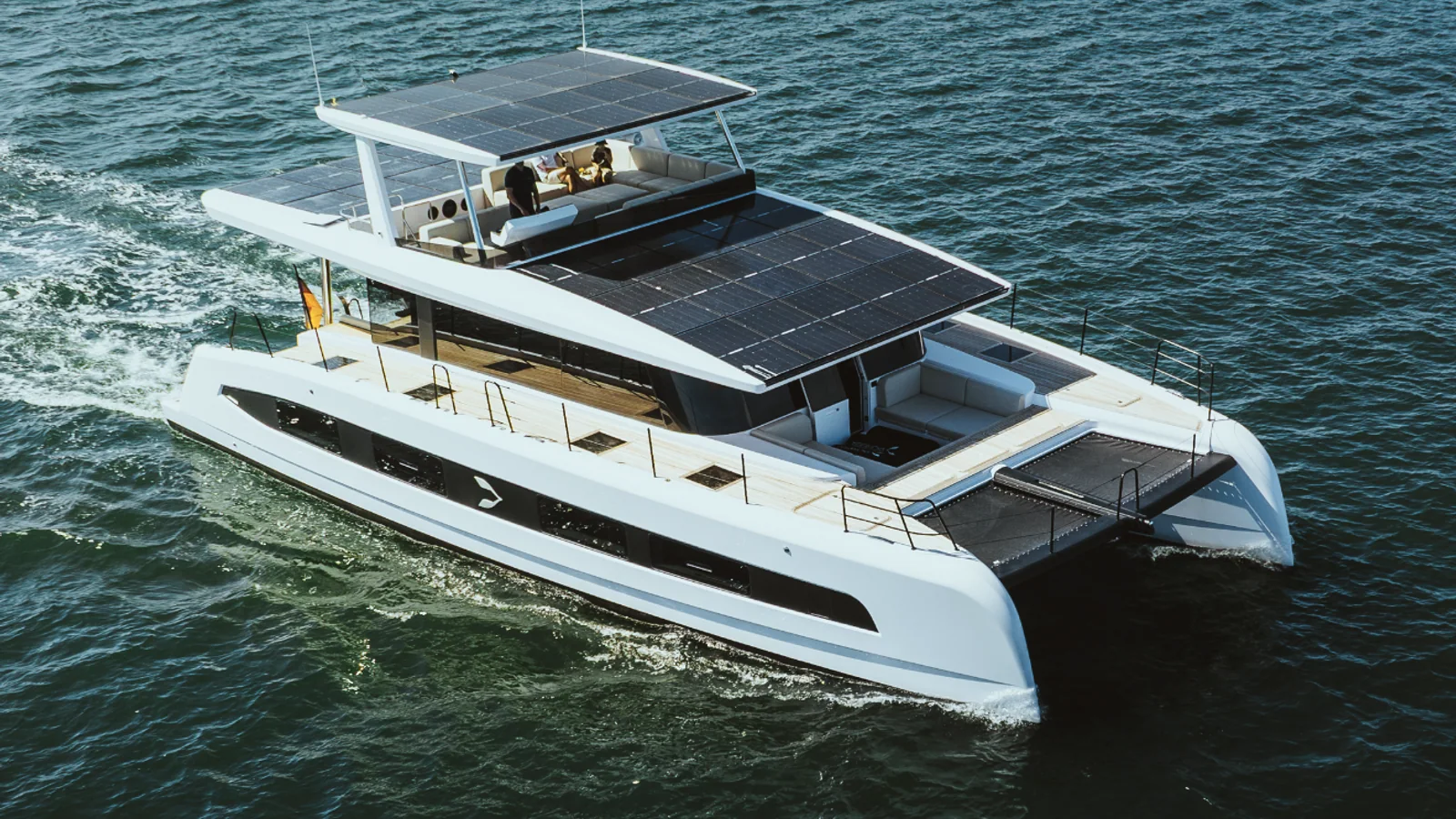
Pioneer Yachts has brought back from Cannes the piece many solar-electric yacht projects lack: measured operating data. The first PY60, named Pioneer One, reportedly required an average total motor power of 6.75 kW at 5 knots during recent sea trials. The yard also quotes an estimated electric range of 150 nautical miles at 5 knots and a hybrid range of about 5,000 nautical miles with the APU running continuously.
That does not prove an 18-metre solar-electric catamaran can replace a conventional motor yacht for every owner. It does, however, give buyers a more useful starting point for discussing quiet operation, energy use and autonomy without relying only on brochure language.
What Needs Testing
The PY60 is built around an integrated energy architecture in which solar generation, electric propulsion and storage are designed as one system. Pioneer lists 246 kWh of battery capacity, a broad solar roof and a 48 V electrical architecture intended to reduce complexity. Cossutti & Ganz handled the naval architecture, while lightship weight is quoted at 30 tonnes.
For an owner, the central question is not simply whether the yacht is greener. It is whether the operating profile fits. If cruising means slow passages in sunny regions, long periods at anchor and carefully managed hotel loads, the concept has a clear use case. If the expectation is a fast daily hop between marinas, the APU becomes a normal part of the operating plan rather than an emergency backup.
Autonomy Or Infrastructure
Our recent Genoa show briefing looked at boat shows through the practical lens of ownership. Pioneer PY60 points in the same direction: less lifestyle theatre, more questions about energy, charging, panel shading, battery temperature and electronics support.
A W Yachts client should compare a PY60-type concept against a conventional trawler or power catamaran already available on the market. The difference is not just purchase price. It is whether the owner accepts 5-8 knot cruising, energy planning closer to an off-grid house and a lower tolerance for casual crew improvisation.