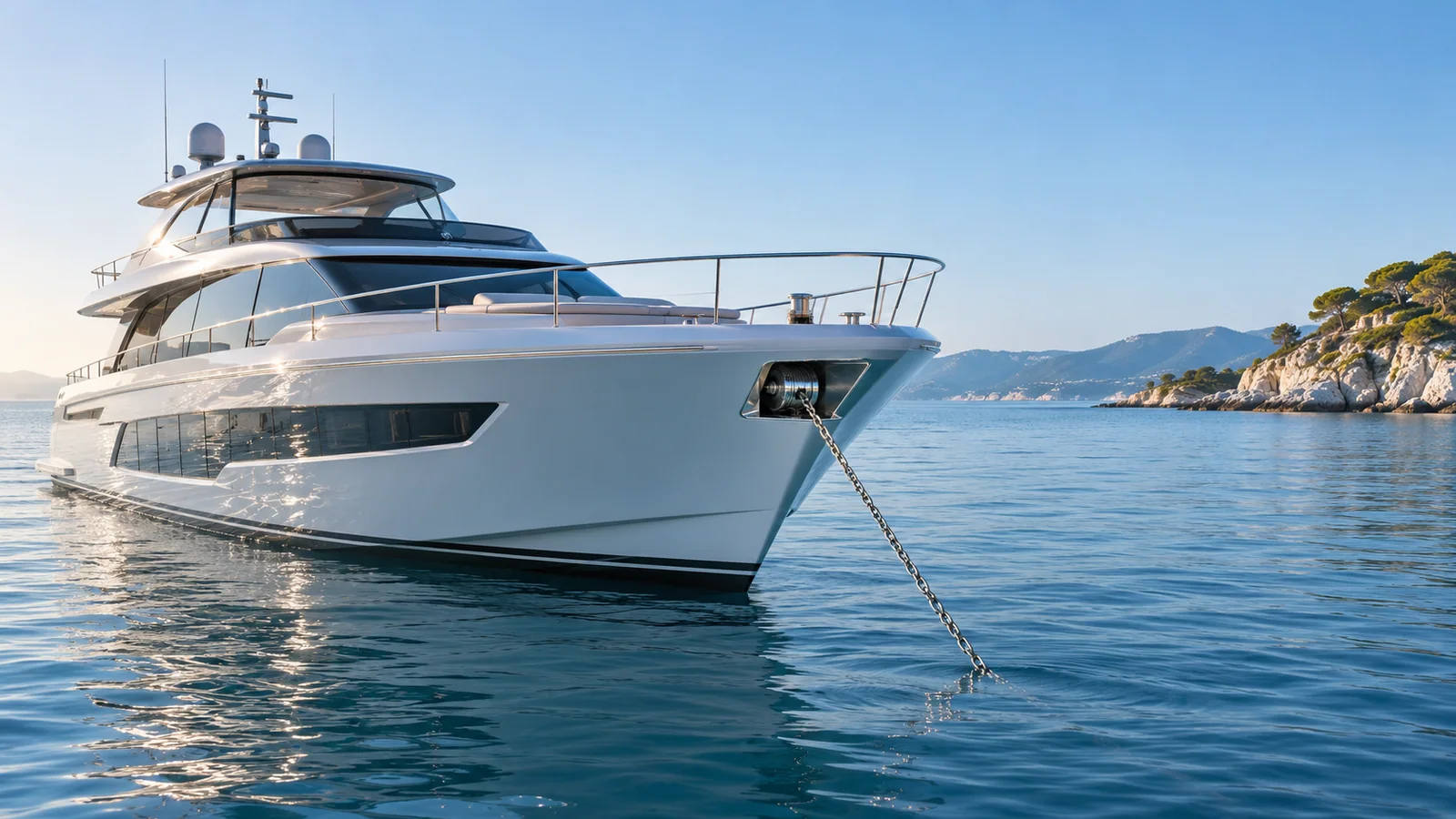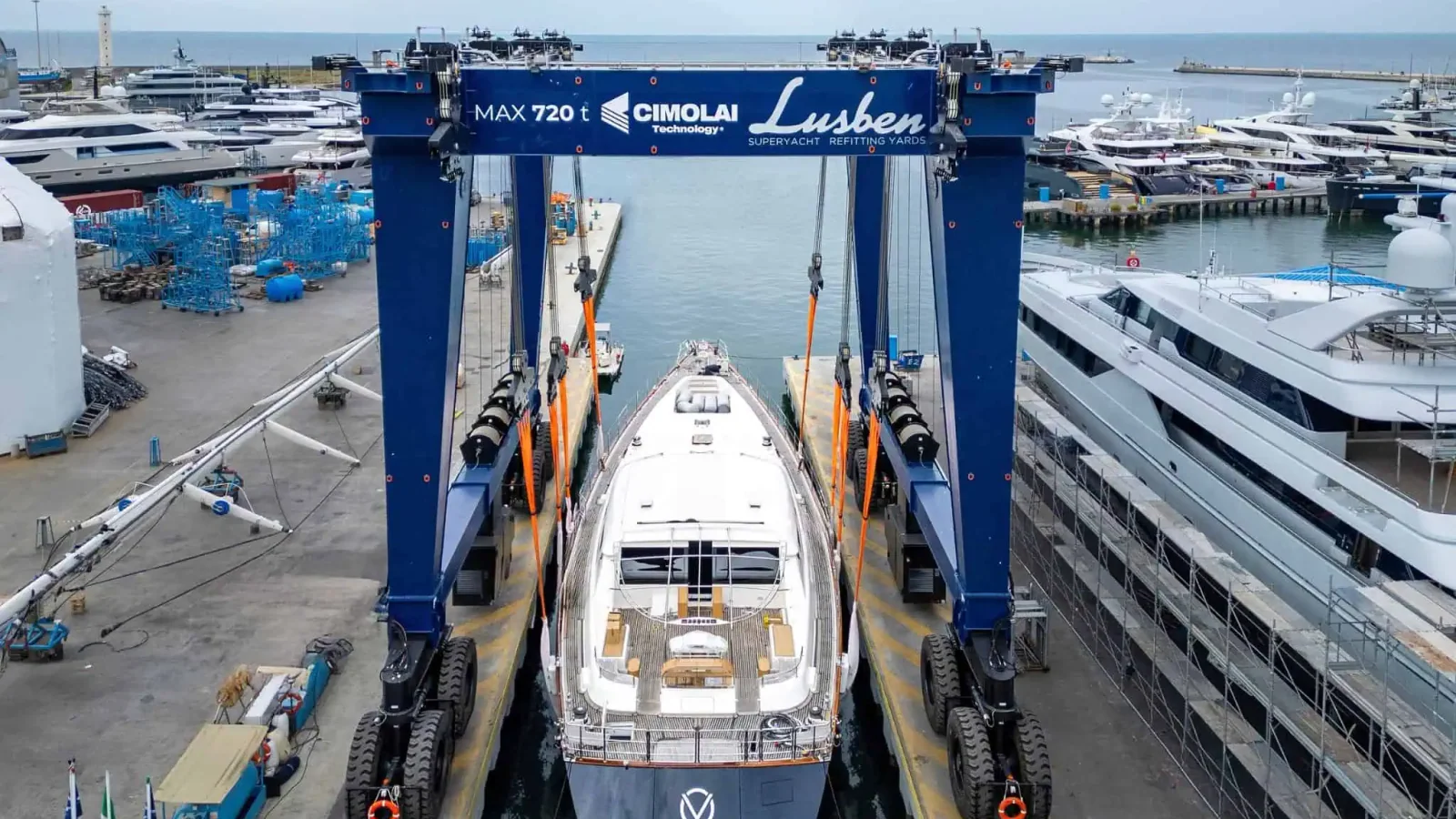
Lusben has relaunched the 40-metre S/Y Olympia in Viareggio after an extensive refit. The Perini Navi sailing yacht, formerly known as State of Grace, was built in 2013. For a buyer, the useful point is not simply that she is afloat again. It is the scope: engine-room work, propulsion plant intervention, replacement of generators and the Selmar system, lifting-keel overhaul, deck hardware, navigation electronics, repainting of hull, superstructure, mast and boom, and comfort upgrades.
That is a practical case study in when a yacht refit makes sense. A refit creates value only when the work reaches critical systems, is properly documented and is followed by commissioning and sea trials.
Relaunch Is Not The Finish Line
Lusben says Olympia still needs her carbon mast to be re-stepped, followed by final commissioning and testing. That matters. A yacht can look complete at the relaunch ceremony while the decisive work still sits in acceptance reports, test data and the final defect list.
The yard also points to project coordination. Lusben carried out most of the work directly and managed specialist suppliers, working with Susanna Corsagni of Seamotion as owner’s representative. With this kind of refit, a simple list of jobs is not enough. Buyers need trial reports, a clear technical decision history and responsibility for work that emerged during the programme.
What A Buyer Should Check
Due diligence on a yacht after major refit should go beyond invoices. It should include documentation for removal and overhaul of the main engine, generator replacement, lifting-keel hydraulics, exhaust work, navigation electronics, paint system and any class or flag involvement. The repaint should also be read carefully, because fresh coatings can hide points that need future monitoring.
For a W Yachts client, Olympia is a useful reminder: a refit should buy operational predictability, not only a cleaner photo set and a more attractive sales description.