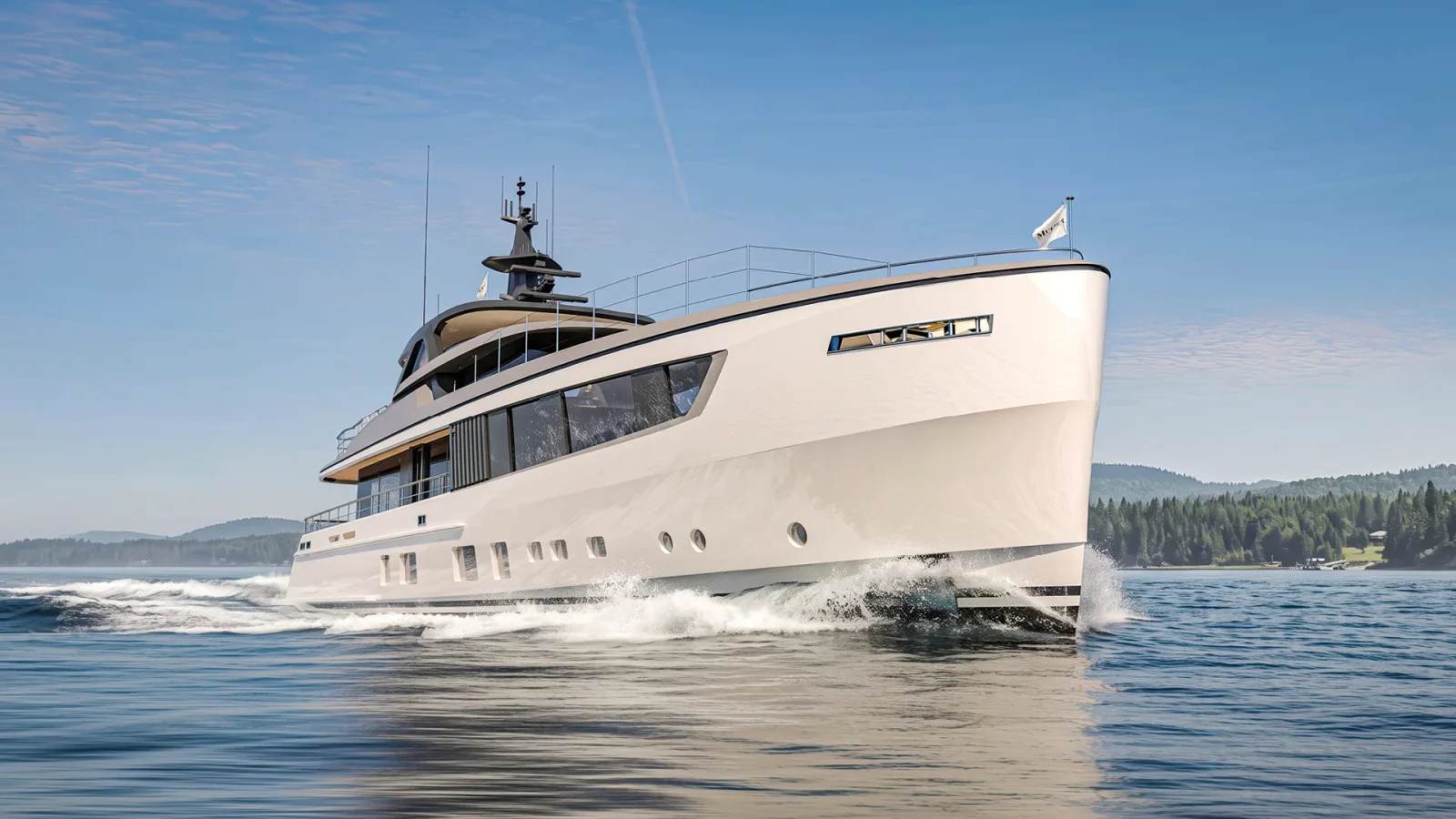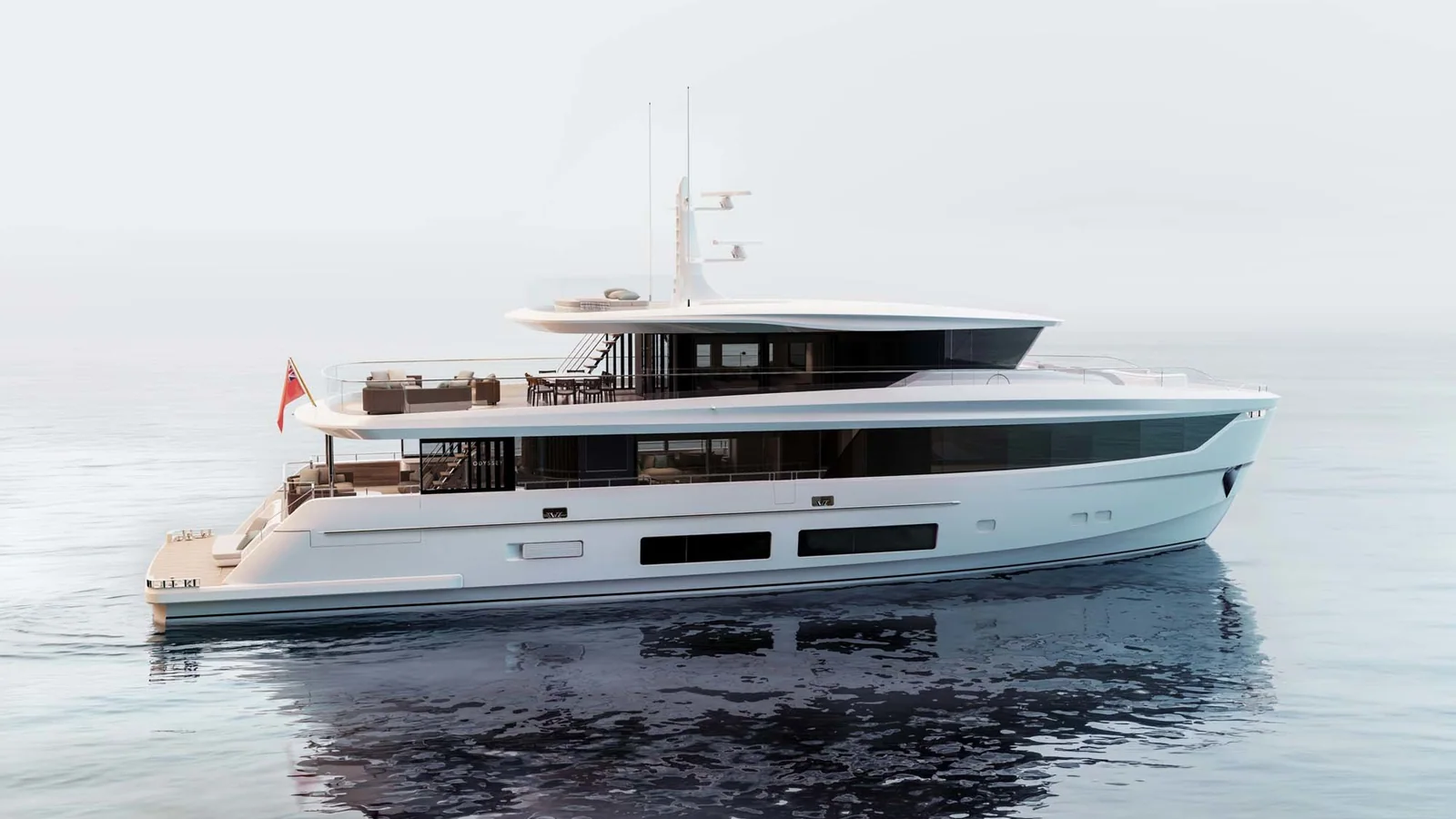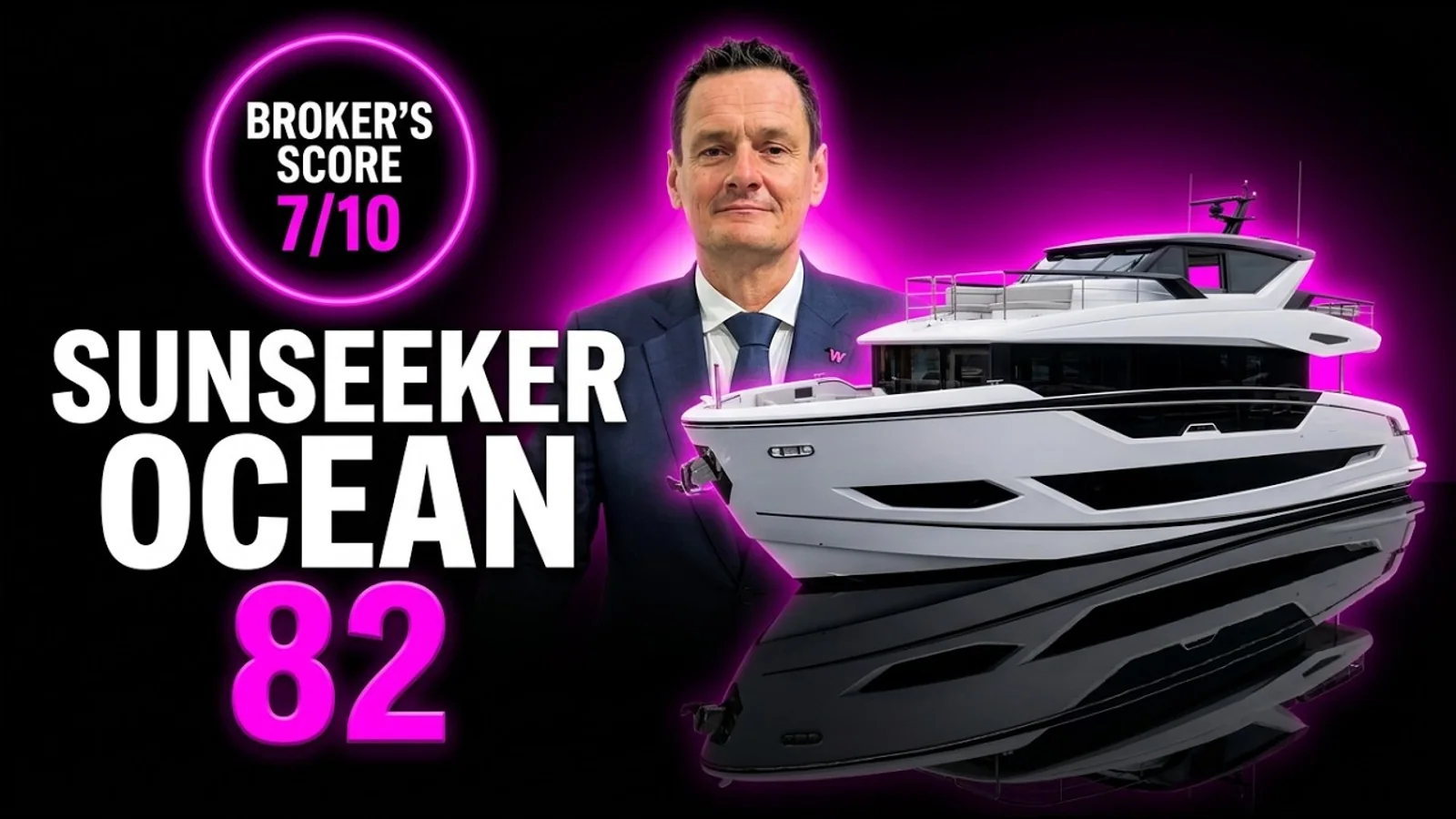
The Sunseeker Ocean 82 is a useful reminder that length alone no longer describes a modern motor yacht. At 25.14 metres overall and 6.56 metres in beam, it is designed to deliver the sensation of a much larger floating apartment. That volume is the central attraction — and the beginning of the ownership-cost discussion.
Sunseeker lists an 8,500-litre fuel capacity, shaft propulsion, MAN power of up to 3,300 PS, a maximum speed of up to 25 knots and a quoted range of up to 900 nautical miles at 10 to 12 knots. These are model specifications, not a budget and not the result of testing the exact yacht a buyer may be considering.
The specifications buyers should start with
- Length overall: 25.14 metres.
- Beam: 6.56 metres.
- Draft: 1.86 metres.
- Fuel capacity: 8,500 litres.
- Propulsion: shaft drives with MAN engines, up to 3,300 PS combined.
- Maximum speed: up to 25 knots.
- Quoted range: up to 900 nautical miles at 10–12 knots.
Every figure needs context. A fully equipped yacht, a fouled hull, heavy stores, running generators, wind, waves and current can all move the real result away from a shipyard table. Buyers should therefore connect the specification to a proper fuel-consumption and range calculation for the yacht and season they intend to operate.
Volume changes the operating model
The Ocean range answers demand for broad decks, panoramic glass and flexible accommodation. The Ocean 82 can offer four or five cabins and a layout that feels closer to a contemporary residence than to a traditional sports yacht. This is real value for an owner who spends weeks on board.
It also creates hotel load. More internal volume means more air to cool, more glazing to manage, more lighting, more pumps and greater expectations of stabilisation and silent operation. An inspection should therefore begin with the systems list rather than the saloon. Generators, air-conditioning, stabilisers, charging, watermakers, automation and machinery-space access determine whether the yacht remains comfortable after the showroom effect has faded.
There is no honest universal OPEX figure
A public annual running-cost number for the Ocean 82 would be misleading. Operating expenditure depends on cruising area, engine hours, marina, insurance, crew structure, planned maintenance, tender use and the owner’s tolerance for technical downtime.
The correct approach is a season budget. It should include main-engine and generator fuel, MAN servicing, air-conditioning, stabilisers, shore power, berthing, insurance, crew, communications, tender maintenance, consumables and a credible contingency for failures. The budget must also distinguish between a yacht used for short family weekends and one operated as a floating home for several consecutive weeks.
Crew is an important part of that calculation. A yacht below 26 metres can still look owner-operable in a brochure. Its windage, hotel systems, guest responsibility and maintenance burden may make a permanent captain — or at least experienced seasonal support — the more realistic choice. A budget that ignores people is not an ownership budget.
Resale deserves attention before purchase
Sunseeker has strong brand recognition, but the Ocean 82 represents a different proposition from the brand’s classic performance-led models. Future demand will come from buyers who value apartment-like volume and accept the systems required to support it. A buyer should compare the yacht with the Princess X80, Ferretti Infynito 80, larger Ocean models and used 80–90-foot flybridges available in Europe.
The comparison should cover more than asking prices. It should include time on market, equipment level, crew requirements, annual maintenance, warranty position and the cost of bringing a used yacht to the same standard. The yacht with the lower sticker price can easily be the more expensive asset after a generator overhaul, tired teak and deferred stabiliser service are included.
The decision test
An Ocean 82 buyer should align three things before making an offer: Sunseeker’s official data, the family’s real cruising pattern and an OPEX figure accepted in advance. The model’s volume is a genuine advantage only when the owner is comfortable funding the systems and people that make the space work.
W Yachts can turn that discussion into a buyer’s brief: service-history review, questions for the seller, comparison yachts, sea-trial data and a season budget. The relevant question is not whether the Ocean 82 makes an impression. It is whether the buyer wants to pay, every year, for the space that created it.