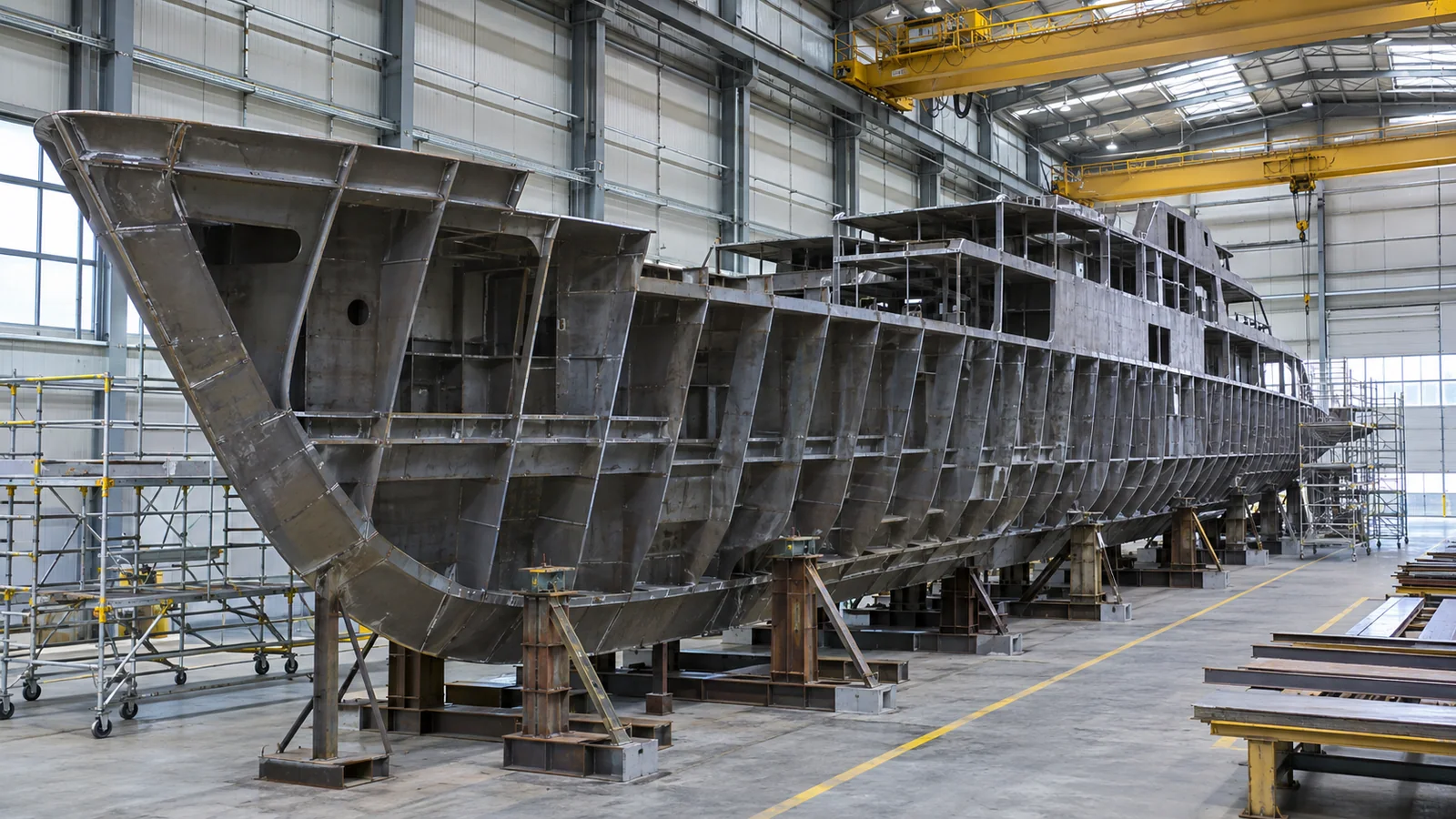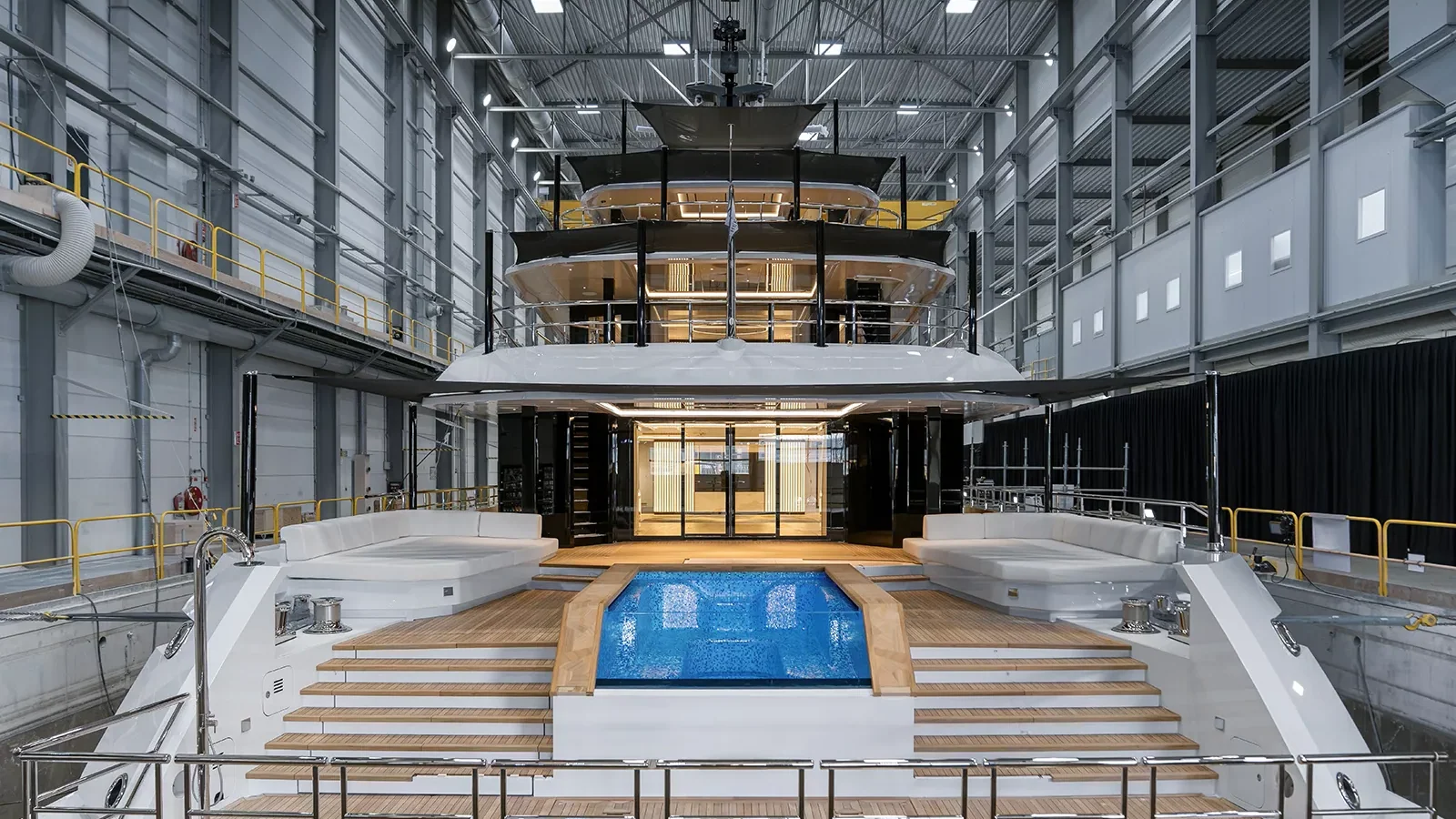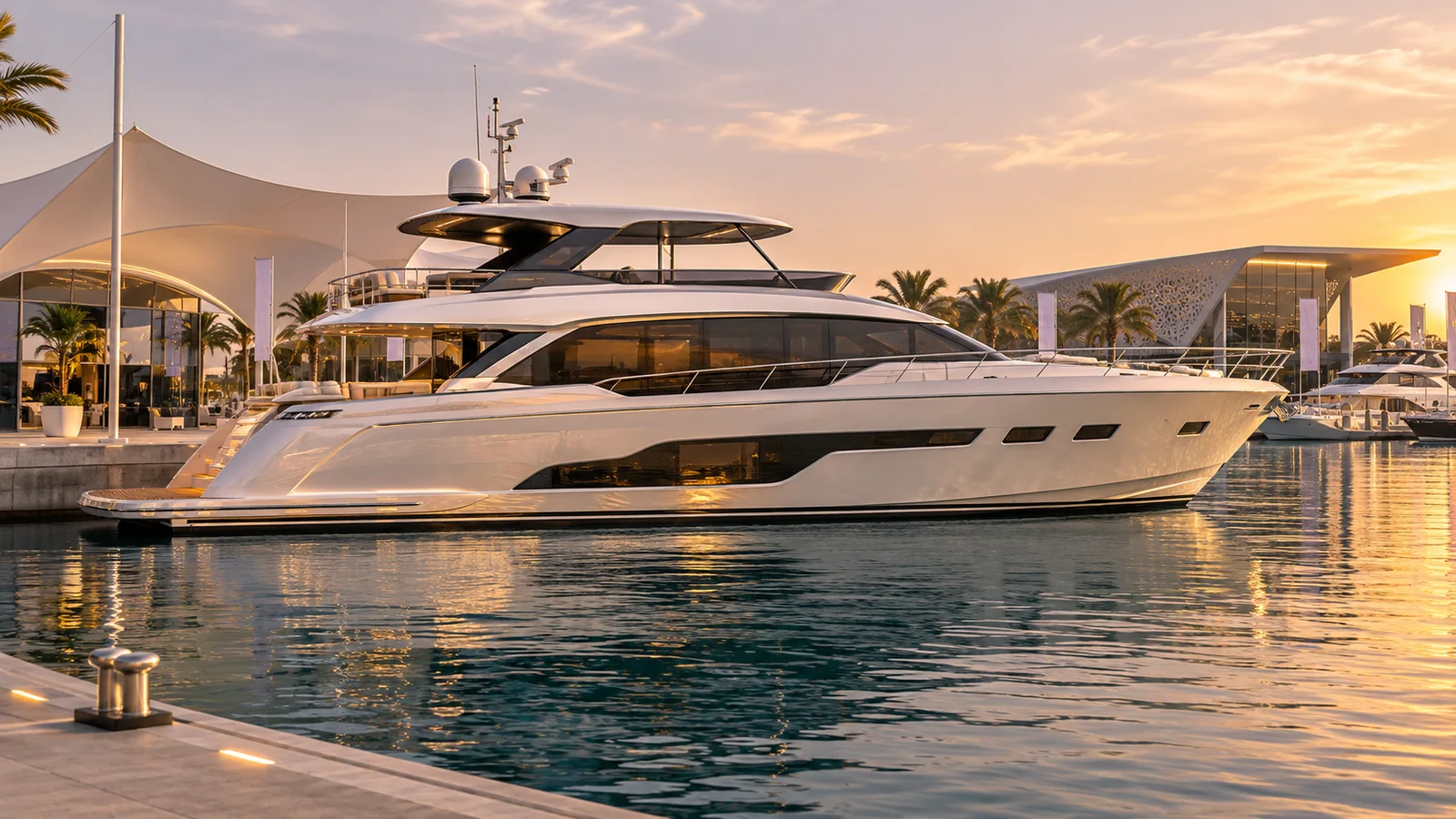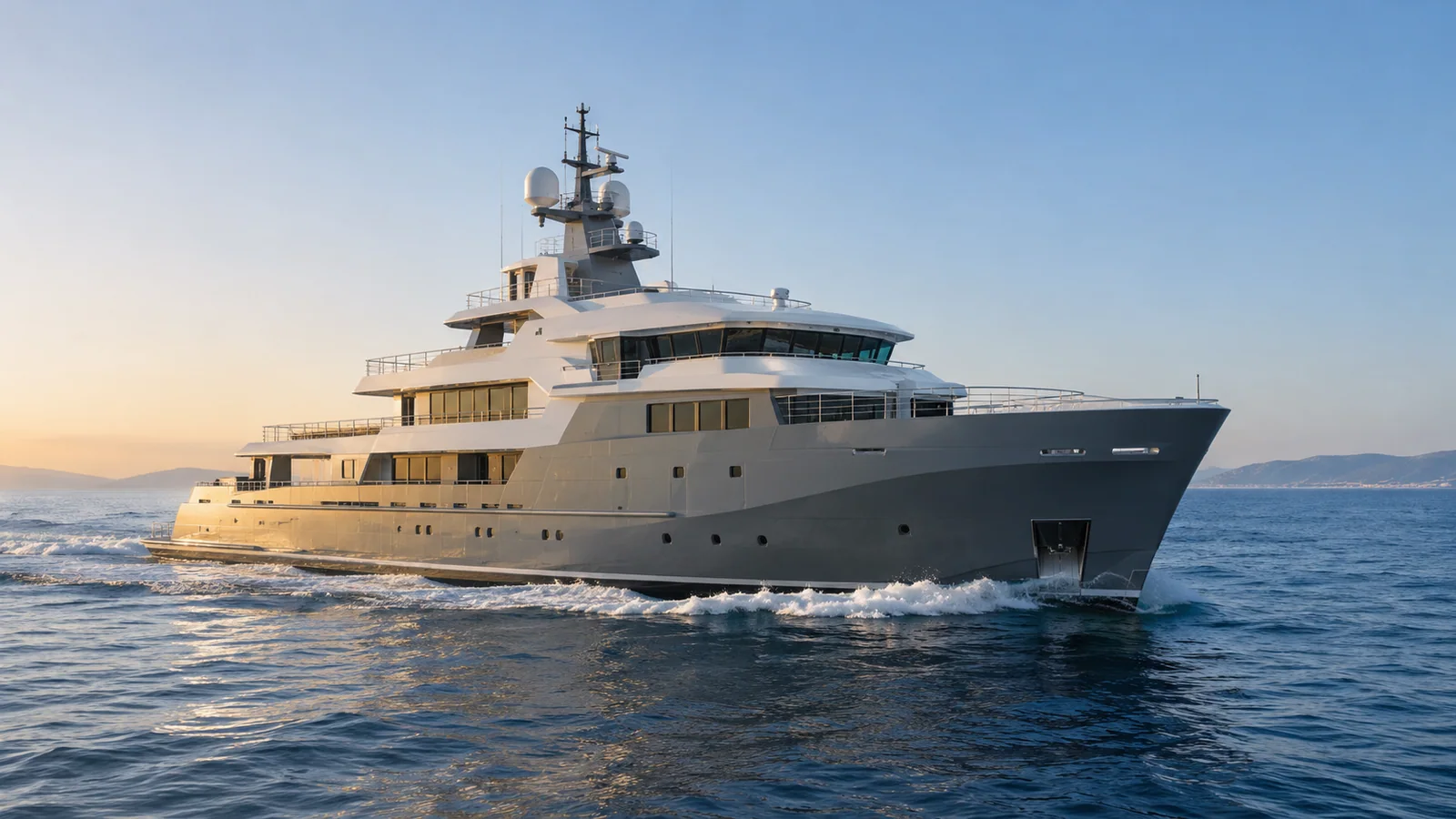
Sanlorenzo has revealed the 1150 Explorer, the new flagship of its Explorer line. The builder quotes a 60-metre length, about 1,150 GT and a 4,000-nautical-mile range at 11 knots. The first hull is allocated and scheduled to launch in early 2027, so this is a project in build rather than a finished yacht available for immediate delivery.
The headline range is not, by itself, a measure of usefulness. For an owner considering longer passages, the question is what sits behind the claim of autonomy: fuel and water reserves, generator operation, service access and crew constraints. Sanlorenzo describes a steel hull, aluminium superstructure and six decks, with accommodation for 12 guests and up to 16 crew.
Scale with a specific purpose
The first hull is highly owner-led. Sanlorenzo highlights a 140sqm beach lounge, a crane for tenders up to 7.5 tonnes, a touch-and-go helipad and a private owner’s apartment over two decks. Those are features of the announced specification, not an automatic equipment list for every future hull.
At contract stage, a buyer should separate structural capability from options. Request an energy balance for the intended cruising profile, limits around tenders and aviation fuel, a service plan outside the Mediterranean, and the applicable ice-class requirements if high-latitude use is genuinely intended. The Explorer label does not answer those questions.
It is also worth comparing the stated range with reserve policy, bunkering routes and weather. A brochure range is a starting point for passage planning, not a promise of the same outcome at every displacement and speed.
Questions before signing
Sanlorenzo has not published a price or delivery windows for follow-on hulls. The discussion should therefore begin with use: weeks away from base, dive support, noise expectations and the degree of privacy required by guests and crew. Our piece on when a yacht refit makes sense makes the same point from the ownership side: technical-layout choices have the longest effect on post-delivery costs.
W Yachts can help structure a comparison brief, but autonomy assumptions should be confirmed in the build contract and technical documentation rather than left to renderings.