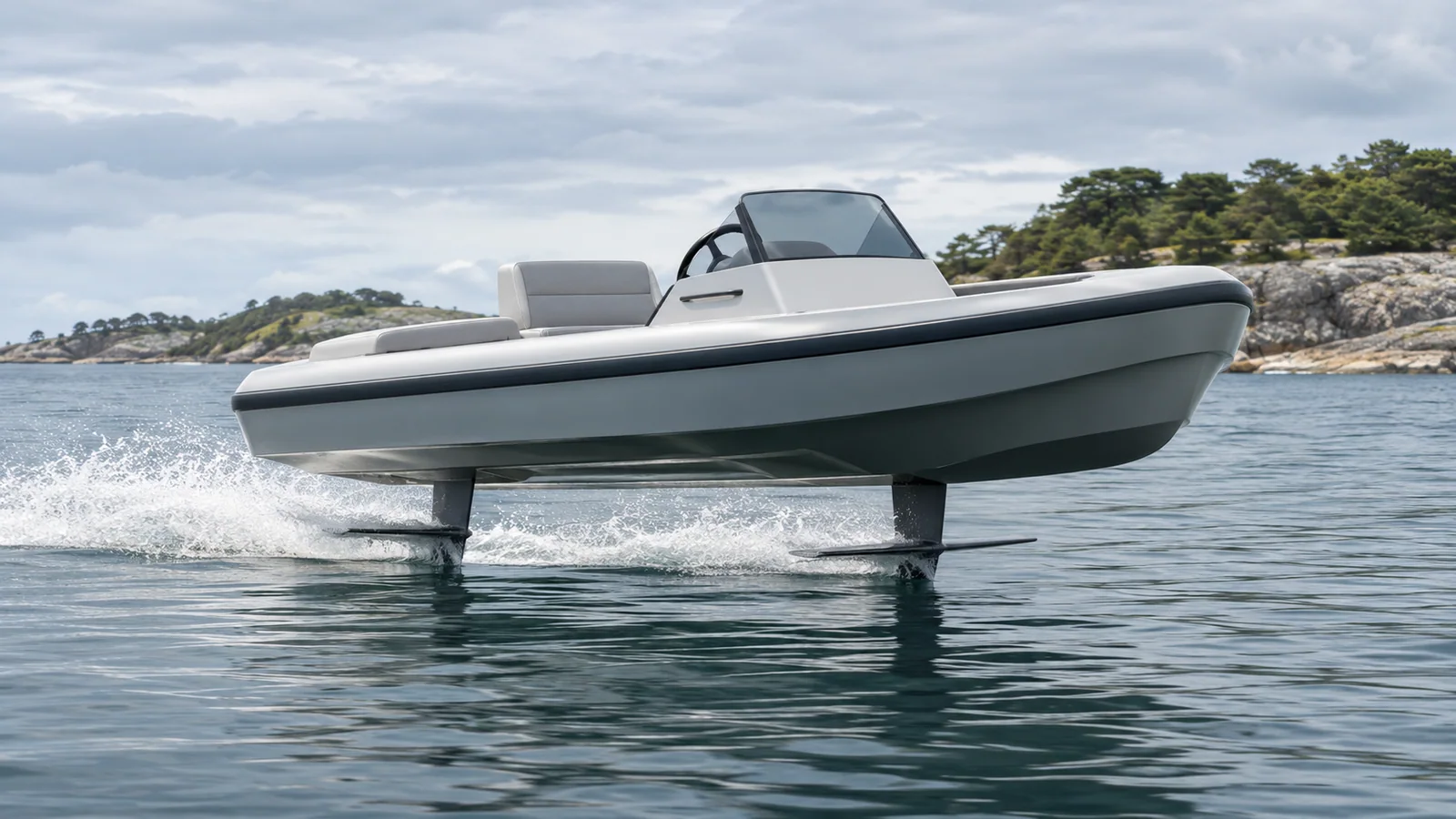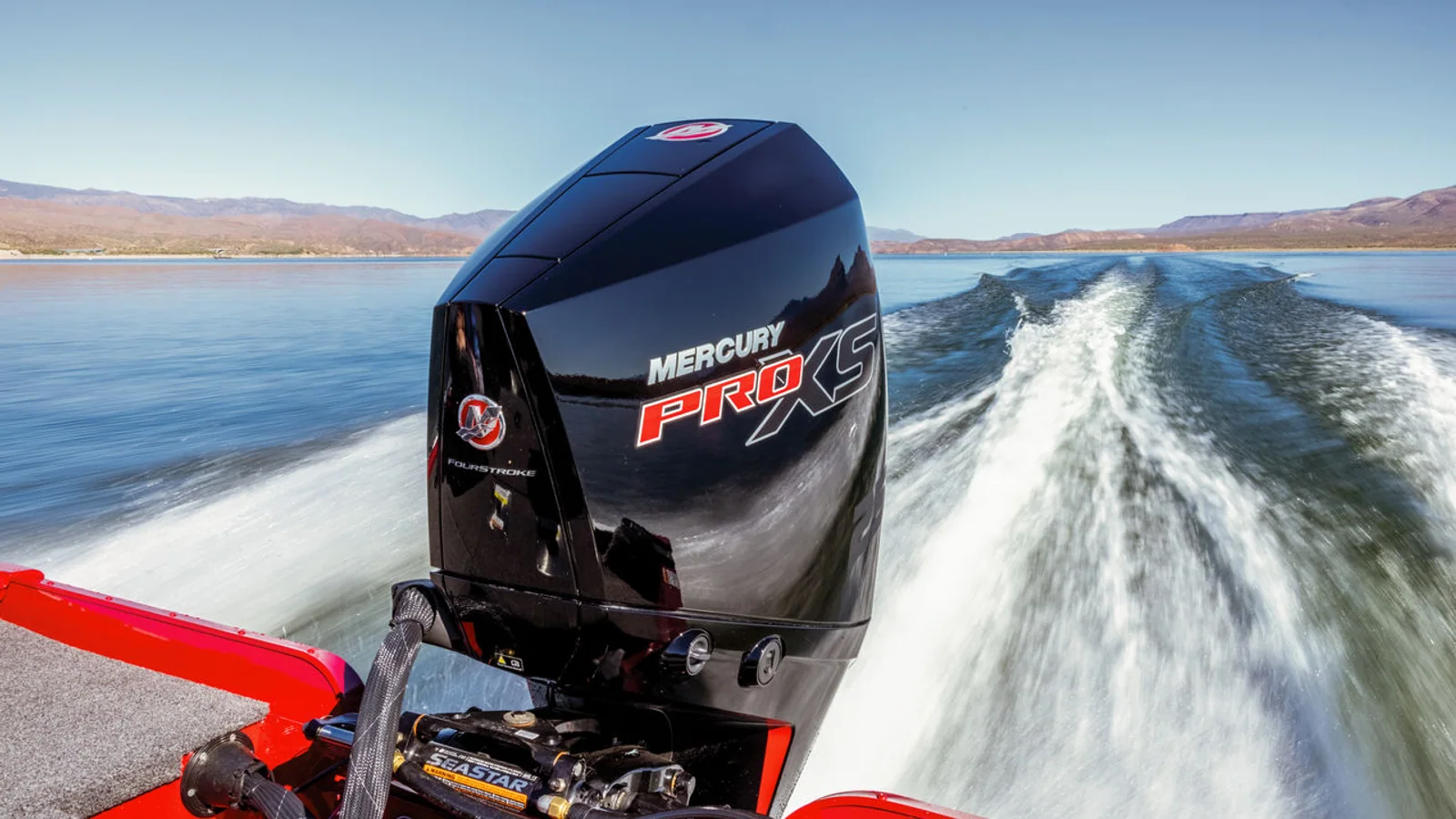
For a large RIB, dayboat or multi-outboard installation, 300hp is often the starting point rather than the upper limit. Mercury offers several versions around a naturally aspirated 4.6-litre V8: FourStroke, Pro XS, SeaPro, Verado and Racing 300R. The shared power figure does not mean the same use case or ownership cost.
Mercury’s FourStroke specification lists the 4.6-litre V8 and an 85-amp alternator at wide-open throttle. The manufacturer also lists Boost compatibility for specified 2026 engines and certain earlier engines after dealer updating. It is not a universal extra-power setting: eligibility depends on the precise version and serial-number range.
Horsepower Is the First Filter Only
For a repower or a new build, start with permitted transom weight and engine spacing. Then consider gear ratio, propeller choice, rev range, steering architecture, battery charging and diagnostic support at the home port. Two engines rated at the same output may drive different installation and low-speed-handling decisions.
Pro XS is positioned for response and performance applications, SeaPro for commercial duty, while Verado combines a more premium equipment level with electronic controls. That is product positioning, not a prescription for a particular hull. It should never be translated into a consumption or speed promise without a trial on the right boat.
Put the Conditions Into the Trial Plan
An acceptance plan should state crew load, fuel load, propellers, temperature, rpm and sea state. Only then can planing, noise, cruising speed and manoeuvring be compared fairly. On a multi-engine package, service access to each engine without removing platform components is equally important.
Before ordering, request a table covering service intervals, in-season parts availability and labour cost at the home port. It says more about future ownership than a catalogue maximum-output figure.
Our recent look at AutoCaptain on Saxdor reaches the same conclusion: power and electronics add value only when they work as one installation. A W Yachts client should compare the complete configuration, not only the 300hp badge.