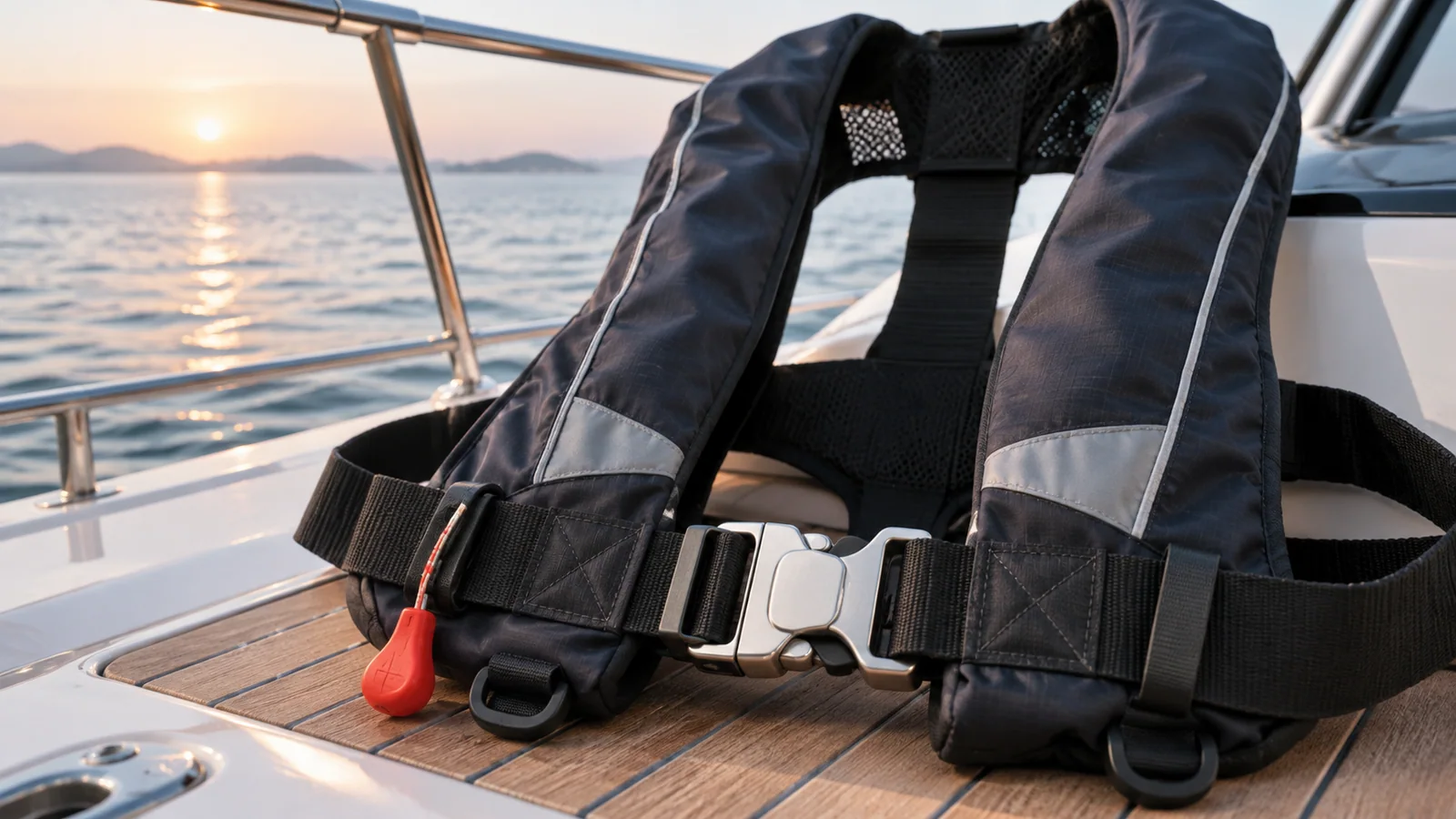
Makefast plans to show its modular Mako lifejacket buckle at METSTRADE 2026. For an owner, it is a small component, but these are precisely the details that can fail after a season in salt water, an accidental snag or when a crew member needs to operate a fastening one-handed. A component launch should not, however, be confused with approval of a complete lifejacket.
What Mako is
The METSTRADE product listing describes Mako as a modular buckle in 316 stainless steel or 45g aluminium. Makefast states a 9mm profile, one-handed operation, audible engagement and a two-button release intended to reduce single-sided opening. Within each material version, it is designed to accept 25, 30, 40, 45 and 50mm webbing without changing buckle strength.
The important qualification is cautious: Makefast says ISO 12402-7:2020 testing is to be applied. That does not amount to an announcement that a finished lifejacket using this component has already been certified. Certification covers a defined product, including buoyancy, inflation system, harness and instructions, rather than the appearance of one fastening.
What to check aboard
Before replacing equipment, a captain should ask the supplier for the exact lifejacket model, relevant standard, sizing range and inspection requirements. It is also worth conducting a practical deck test: gloves, wet hands, light and heavy clothing, plus access to the safety knife and harness. A flushable buckle is useful, but it is no substitute for scheduled inspection of the mechanism. The service log should also record who is authorised to replace a component and when the next complete inspection is due.
This follows the same principle set out in our report on SEA.AI alarm electronics: a manufacturer’s statement starts a procedure; it does not complete it. During a purchase or refit, W Yachts can help structure an equipment and acceptance list, but final confirmation should relate to the complete certified lifejacket used by the crew.