Fort Lauderdale International Boat Show closed on 1 November without a post-show organiser release giving final attendance, transaction numbers or sales values. Crowded docks are not evidence of completed deals. The show does, however, reveal how a buyer’s starting position has changed.
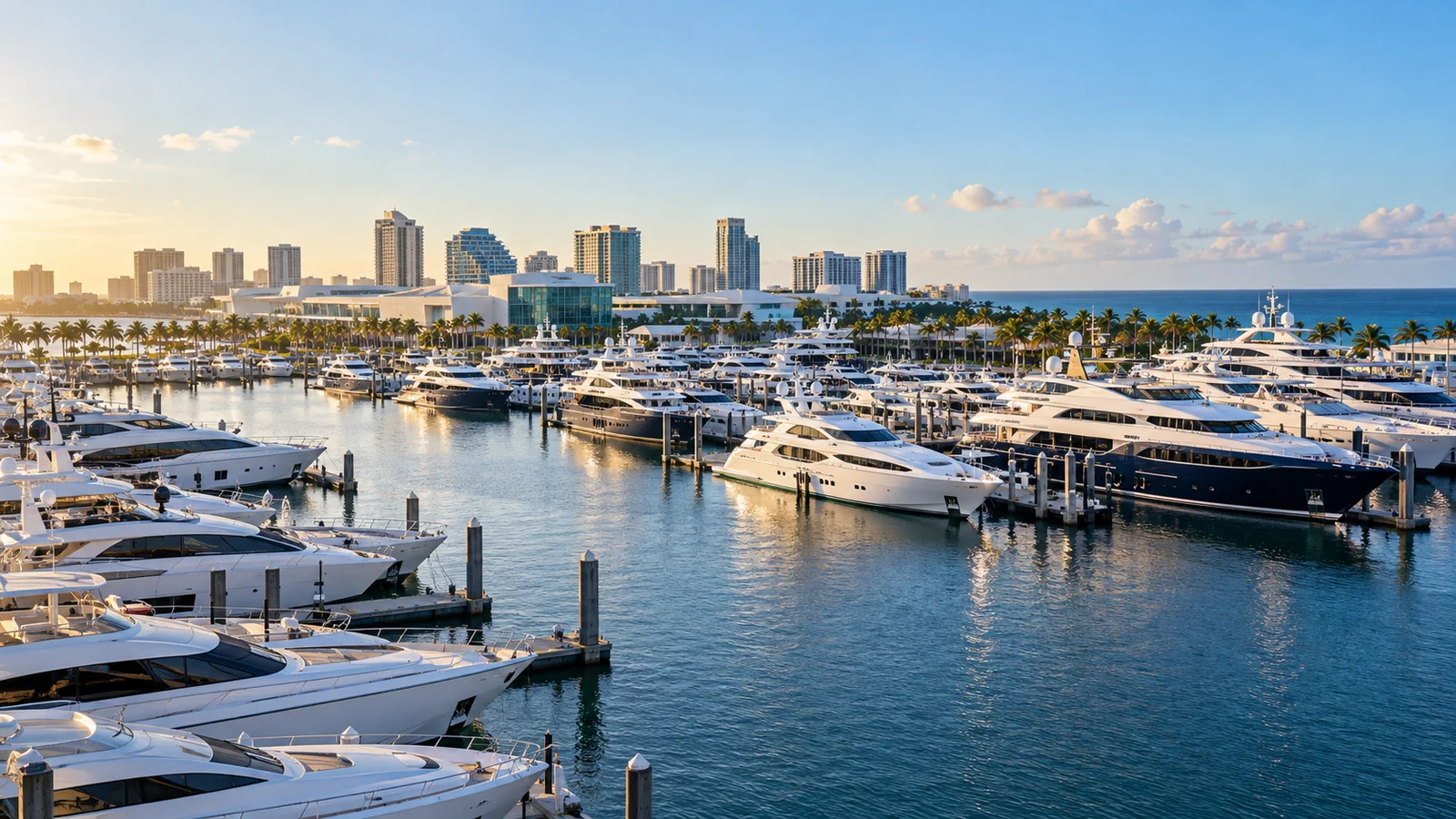
FLIBS had officially advertised more than 1,300 boats and yachts, more than 1,000 exhibiting brands and a programme of world and US debuts. YachtBuyer Intelligence, monitoring the opening-day fleet, counted 216 superyachts (+27% year on year), 121 announced debuts (+41%) and 179 yachts listed for sale (+20%). Those are YachtBuyer figures, not organiser results.
More choice, not an easier sale
YachtBuyer put the combined asking value of the brokerage fleet it tracked at $1.9 billion. Its average asking price fell from $11.9 million to $10.9 million. This is neither a transaction-price index nor proof that the whole market is falling. It does show a wider and more varied choice set. A seller now has to defend the price with condition, service evidence and a practical delivery timetable.
That is the first message for an owner: more available yachts do not make an average yacht easier to sell. A boat without current invoices, a transparent work list and a credible pricing plan will be measured against more, and often newer, alternatives.
New launches reset the comparison
The official FLIBS list included the Pearl 100 Hybrid, Prestige M8 EVO, Absolute Navetta 66 and several new Viking and Valhalla models. They are not direct price competitors, but together they raise the comparison standard for pre-owned yachts. Buyers are assessing layouts, controls, energy systems, warranties and local support rather than simply length and cabin count.
The US market also rewards practical details: easy operation, parts availability and dependable service. Visibility around a launch is not a replacement for a written after-sales commitment.
Hybrid, power cats and refit
Hybrid yachts and power catamarans have moved into the central show offer. That does not make a hybrid badge a buying decision. The buyer should test the operating profile, battery mass, generator dependence, service access and the genuine running economics. For a catamaran, berth cost, sea behaviour and resale liquidity are equally material.
FLIBS also used its 2026 seminar programme to introduce RefitX 2027, a dedicated refit conference and exhibition. Refit is becoming a distinct market with its own yard capacity, technical risk and capital planning — not a footnote to brokerage.
What this means for a Polish buyer
Before committing to a Florida yacht, ask for an independent technical survey, a European service plan, the VAT and customs route, transport and commissioning cost, and a fair comparison with a Mediterranean alternative. Our earlier FLIBS market preview set out the questions to bring to the show. The conclusion after it is simple: negotiate after diligence, not after the dockside impression.
A longer buying process is not a weaker market
There is a temptation to turn a busy boat show into a binary verdict on demand. That is rarely useful in yacht brokerage. A serious transaction can start with a viewing in Fort Lauderdale and close only after a survey, sea trial, ownership review, flag decision, tax analysis and a practical handover plan. None of those steps is visible in a closing-weekend crowd or an exhibitor’s visitor diary.
For that reason, the absence of an official post-show transaction total is not a gap to be filled with assumption. It is the boundary of what can responsibly be claimed on 2 November. Any later sales announcements need to be checked individually: a signed contract, a delivery and a broker appointment are different events.
Where the comparison becomes expensive
The additional supply is most valuable when it is turned into a structured comparison. A buyer comparing Florida and the Mediterranean should put the same specification beside each yacht: engine hours and overhaul evidence, generator and stabiliser history, hull and machinery survey findings, tender and toy inventory, berth constraints, crew status and the equipment required for the intended cruising area. The asking price is only the first line of the calculation.
The same discipline applies to a new build. A new layout, hybrid system or younger model year may justify a premium, but only if the delivery date, options, warranty transferability and service plan are contractual. A display boat may also differ from the yacht eventually delivered. Show equipment and contractual equipment must not be treated as the same thing.
Refitting versus replacement
RefitX matters because a buyer now sees the replacement decision more clearly. The choice is not simply an older brokerage yacht or a new order. A well-documented refit can improve reliability, usability and compliance readiness; a poorly scoped one can absorb the price advantage of the used yacht. The inspection should therefore identify which work is mandatory, which is value-creating and which is cosmetic. Yard capacity and the operating calendar are part of that answer.
For a Polish owner, this is particularly relevant when a yacht will return to Europe after a Florida purchase. The selected yard, transport schedule, VAT route and service network should fit together before a deposit is released. FLIBS offered more objects of comparison in 2026; it did not remove the need for that work.
Five decisions after the show
The productive next step is not another list of models but five decisions. First, is immediate availability more important than a particular specification that needs time? Second, which items have documented history and which have only a seller’s assurance? Third, can local support actually be replaced by support along the owner’s route? Fourth, what budget remains after import, insurance and the first season? Fifth, does the yacht still win against genuinely available Mediterranean alternatives?
An owner preparing to sell can use the same matrix in reverse. Missing records, deferred service and unclear options reduce comparability before the discount discussion begins. A selective market does not reward the loudest display; it rewards information the buyer can test.
What to watch next
The next weeks will show whether individual yachts seen in Fort Lauderdale leave the market or remain available through the winter. Yard capacity and the conversion of new launches into orders will also matter. A single sales announcement is not a trend. Only a repeatable pattern of time on market, price adjustments and confirmed deliveries will show whether the prepared buyer’s advantage is structural or merely a feature of this year’s display.